July Streaming
A One-Way Ticket to Palookaville, Please

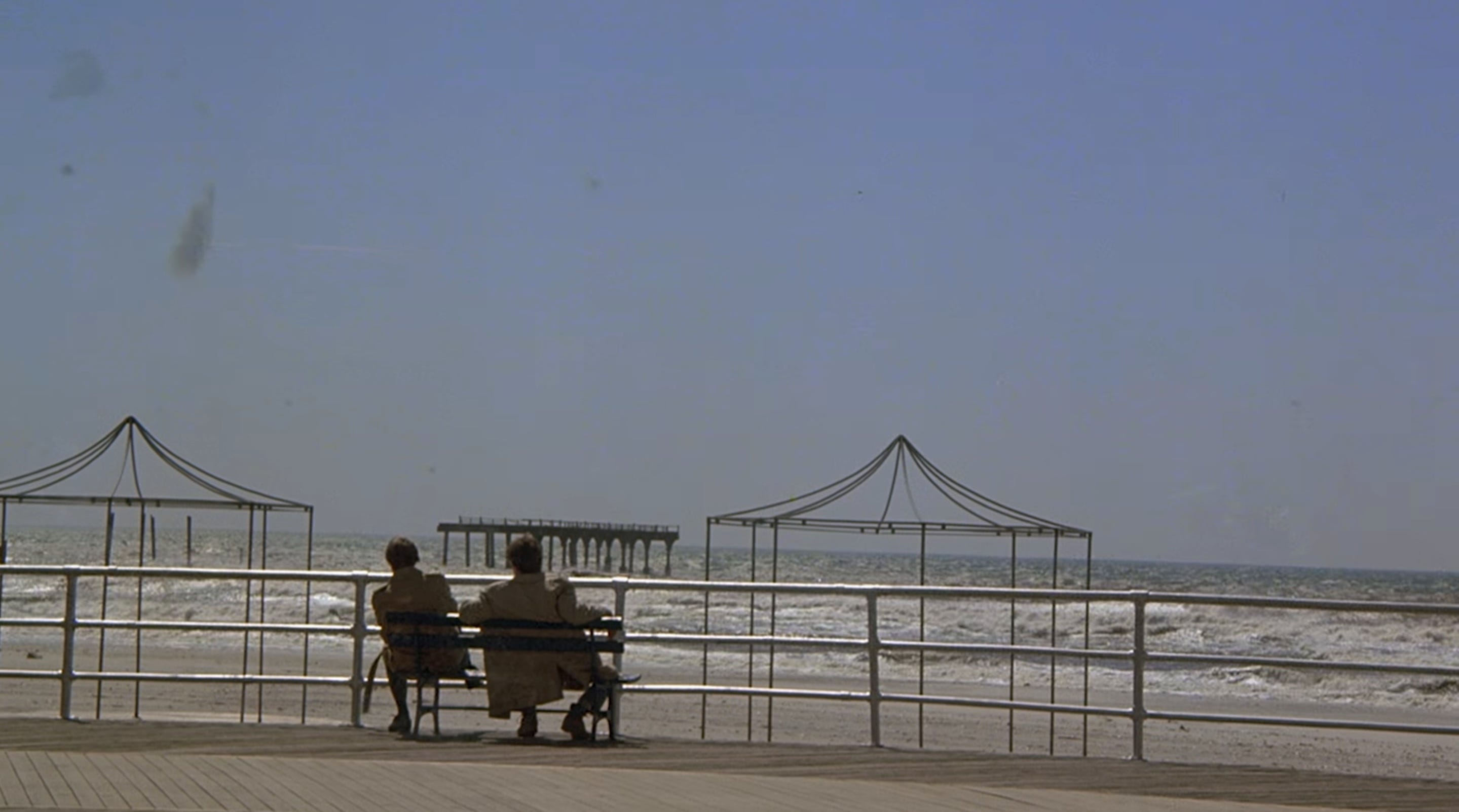
“This pier lights our carnival life forever,” Bruce Springsteen, New Jersey’s anointed troubadour, famously sings on the chorus of 4th of July, Asbury Park (Sandy), the second track off his sophomore album, The Wild, the Innocent & the E Street Shuffle, which speaks to a love once consummated on the Jersey Shore in a bygone era. “Oh, love me tonight, for I may never see you again.” In July of last year, after years of worshiping the Boss and fetishizing the Jersey Shore, I made my first sojourn to Asbury Park for the 4th of July, squeezing onto the packed beach, stuffing my face with rigatoni, and walking the famous boardwalk at night, dipping in and out of the pinball museum to sample weeping ice cream cones and watch families frolic and bicker under a temperate Jersey sky.
This year, on July 6th, Wesley Lake, located just south of the iconic Stone Pony, where Springsteen got his start, swelled under the onslaught of severe rain, swallowing the adjacent Lake Avenue in two feet of water right at the height of the tourist season. Two days later, on July 8th, residents convened at a city council meeting to discuss the future of the Asbury Park boardwalk, particularly the Stone Pony, the Convention Hall complex, and the Sunset Pavilion and the Casino building, all of which are falling into disrepair from decades of weather exposure and a controversially slow redevelopment process by a Washington D.C.-based developer. According to a recent study by Rebuild by Design, a nonprofit organization based at the Institute for Public Knowledge at New York University, which considers infrastructure solutions to combat climate change, much of Asbury Park, along with much of the Jersey Shore, could be wiped away in in fewer than 25 years; by that time, more than a third of public assets in the state of New Jersey will be in flood zones. In an early live version of “Sandy,” Springsteen altered the final chorus, replacing “this pier lights our carnival life forever” with the far-darker, and prescient, observation that “this beach light, it cannot go on forever.”
Welcome to July streaming, accessible, as always, here.
July always reminds me of Jersey, but this year, especially so: this past weekend, the eye of the whole world was on, of all places, East Rutherford, accompanied by a chorus crying corruption—fitting for a venue that sits atop the alleged final resting place of Jimmy Hoffa. It was the first moderate day in the tristate area in weeks, after smoky skies, torrential downpours, and immoderate heat, a constant reminder that those precious, uncomplicated nights of yore Springsteen sang about are now encumbered. And so too does The Spread turn its eye to Jersey, and its many stories, this month. It’s just one part of a streaming newsletter stuffed full of local pride: we’re also looking back on the prolific work of an iconic New Yorker, as well as celebrating island life—after all, NYC is “the real Love Island.” Finally, amidst the Obsession and Backrooms mania sweeping the nation, we look back at other movies made by digital content creators. The Aurora is rising behind us, so come bang on these pleasure machines:
In a State of Irony: New Jersey on Screen
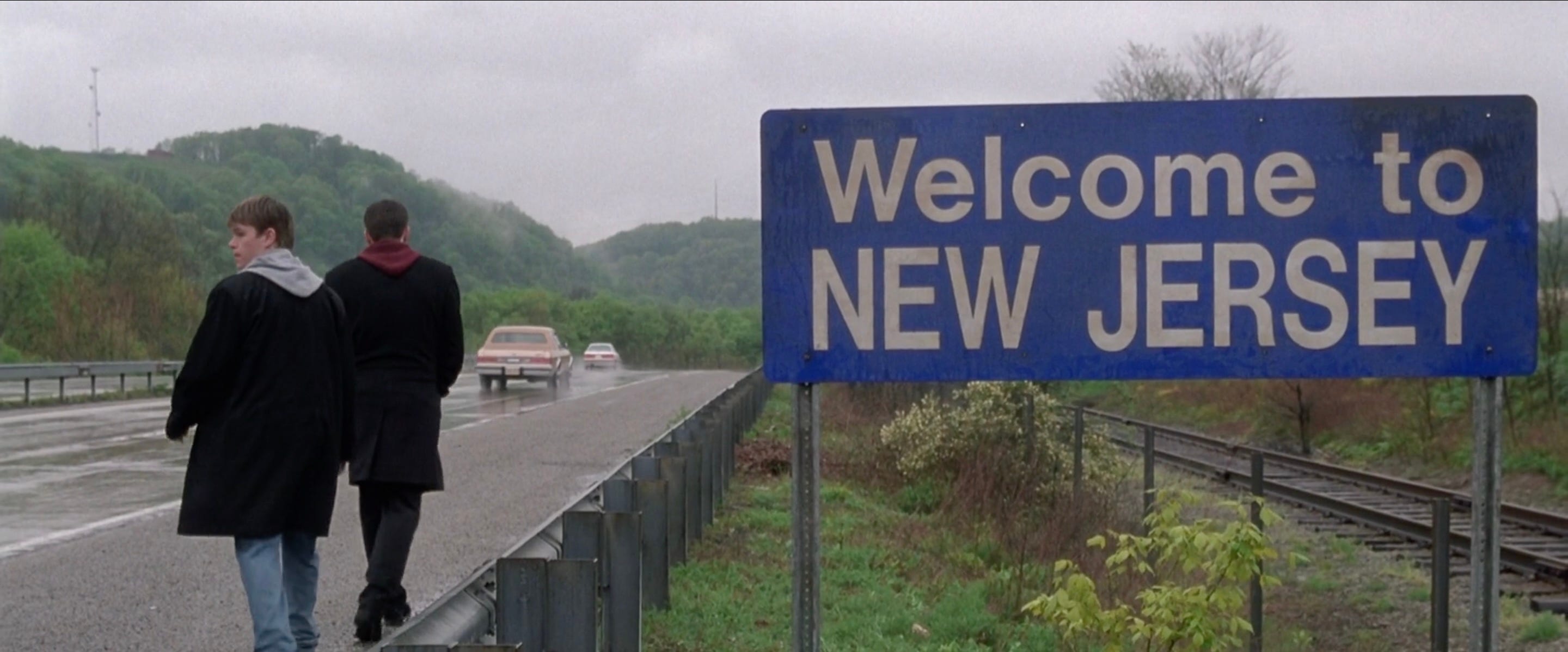
“why are famous people from nj so angry and sad[,] can’t think of any exceptions (see also: Zach Braff, all of My Chemical Romance[?]” an oracle named “buzzkillary” once asked in “Lorde and Jack Antonoff — An Emotionally Broken Journey,” the infamous 29-slide PowerPoint presentation from 2018 that unpacks the alleged illicit affair between the New Zealand pop star and her then-producer, which has since become a fabled text in the online gossip pantheon—and is back in the news because of Lena Dunham’s Famesick and Antonoff’s impending divorce (to wife Margaret Qualley).
It’s a fair question, informed by Braff’s infamous directorial debut, Garden State (2004), which stars the writer/director as an over-medicated struggling actor who returns to his hometown in New Jersey after his mother dies, sending him back into the mundane yet bizarre world he left behind (the film was shot on location in Braff’s real-life hometown of South Orange, New Jersey, located west of Newark). In my formative years, Garden State, with its tony suburbs and seedy underbellies (remember Method Man’s peeping tom motel?), was my main reference point towards understanding the peculiarities of our 3rd state; in college, it became Jersey Shore (2009–2012) and its t-shirt shop-laden boardwalks and near-mythical nightclubs; and now, as an adult, I realize it’s the satirical dark comedies of Newark native Todd Solondz, which mine the anxieties and pathologies of the commuter state petite bourgeoisie for comedic effect. “You know, people are always putting New Jersey down,” Lara Flynn Boyle opines in Happiness (1998), Solondz’s controversial sophomore feature about three very unhappy sisters ensnared in a Saw trap version of Jersey. “None of my friends can actually believe I live here, but that’s just because they don’t get it: I’m living in a state of irony.”
We all know that commercial American film was born in New Jersey—at Thomas Edison’s “Black Maria” studio in West Orange, where films like Blacksmith Scene (1893) and Fred Ott’s Sneeze (1894) were shot for exhibition on Edison’s peepshow-style Kinetoscope viewer, making them two of the oldest surviving copyrighted films. But Jersey also played a part in the development of commercial American television: a Bell Telephone Laboratories demonstration in 1927, one of the most sophisticated of its era, sent an early image transition to New York City via copper wire link from Washington, D.C., as well as on a radio link from Whippany, New Jersey, proving the possibilities of a televisual system. Seventy years later, the state gave us The Sopranos (1999–2007), the greatest television show of all time, which tells the story of a bunch of mobsters holed up in the suburbs of New Jersey, where they’ve retreated into a dark facsimile of the American Dream (and find themselves as bored and miserable as everybody else). I’m not saying New Jersey is America’s Mount Helicon, but it really did bring us film, television, and this.
The films and shows in this program capture Jersey in all its facets: heaven, hell, and purgatory; north, central, and south (in no particular order). A multi-ethnic melting pot influenced by waves of immigration out of New York City, Jersey serves as a cultural crossroads in films like John Sayles’ period romance Baby It’s You (1983) and Brian De Palma’s gangster comedy Wise Guys (1986), which feature Jewish-Italian relationships, as well as Stanley Tucci’s incredibly underrated dinner party movie Big Night (1996), set at an unsuccessful, authentic Italian restaurant on the Jersey Shore, which struggles to connect with our simplistic American palettes. Feminist cult classics Desperately Seeking Susan (1985) and Frankenhooker (1990) contrast sanitized, suffocating Jersey suburbia, and its alignment with the nuclear family, with the lawless, liberated space of the Big Apple; Union City (1980) and Restaurant (1998) ask what might be possible if Jerseyans could just get across the river to really begin life. Horror classics like Friday the 13th (1980), Christmas Evil (1980), The Prowler (1981), and The Toxic Avenger (1984) draw atmosphere from Jersey locales, and inspiration from the curiously unnerving nature of Jersey life. And movies like New Jersey Drive (1995), Cop Land (1997), and The Hurricane (1999) interrogate the relationship between communities of color and local police, an extension of the entrenched racial strife in Jersey’s decaying, neglected urban centers, ravaged by poverty and white flight at the end of the 20th century.1 Plus: we’ve got local lore like the Jersey Devil, Action Park, and White Castle. And I didn’t even mention Kevin Smith once—not once! (I love Kevin Smith and make all apologies for his filmmaking).
Come meet me tonight in Atlantic City—like, maybe with the film Atlantic City (1980)?
Gen “Z” for Zeitgeist: Web Creatives in Hollywood

In the long arc of film history, there have been a number of existential threats to film stemming from technological innovation, all of which have been absorbed by the medium, somehow still standing. Silent filmmaking incorporated synchronized sound; theatrical distribution survived broadcast radio and television by expanding the scope and frame of the picture and deputizing talented TV creatives; the industry incentivized “event moviegoing” in response to at-home streaming services; and now, in an era being redefined by internet-native storytelling, it is cannibalizing (or, let’s say, graduating) the first generation of young creatives raised in the shadow of online media platforms. With the recent titanic success of two outsider films from former “YouTubers”—Curry Barker’s record-breaking cheapie Obsession (2026), and Kane Parson’s Backrooms (2026)—the buzzy narrative du jour has become: are digital content creators the future of Hollywood? And if so, who’s next?
The Obsession / Backrooms story is part of a larger phenomenon of Millennial/ Zillennial/Zoomer takeover of film culture that has been brewing for a while now, but seems to have fully metastasized in 2026: earlier this year, Iron Lung (2026), a survival film entirely independently produced by writer/editor/director/star Mark Fischbach, aka playthrough video-maker “Markiplier” on YouTube, also became a box office sensation. Cult web series-turned-show-turned-feature from Canadian sensation Matt Johnson, Nirvanna the Band the Show the Movie (2025), overperformed at the specialty box office when it finally debuted internationally earlier this year. And in March, veteran character actor Amy Madigan won an Academy Award for her supporting performance in horror hit Weapons (2025), directed by former sketch comedian Zach Cregger (part of the aughts comedy troupe The Whitest Kids U’ Know, which built a loyal following online before landing a TV show). There’s a narrative coalescing here that suggests that internet media success can be leveraged into critical and commercial success, cracking the code on a transition that has been attempted since 2010, when the first wave of “YouTuber” films released to widespread cultural derision.2 And with the recent high-profile collapse of several big name tentpole films and an industry still reeling from talent displacement, post-strike/COVID recovery, and the ongoing impact of streaming, Hollywood is looking for a new (cheap) way to get back on top. Two viral horror shorts, included here, are hoping to be the “next” Backrooms—Dylan Clark’s Portrait of God (2022), which is being adapted through Jordan Peele’s Monkeypaw Productions with Peele and Sam Raimi as producers, and Sam Evenson’s Mora (2024), which is being adapted by Neon through Weapons producer Roy Lee. Maybe these movies will be the “next” Backrooms, which is really just the “next” Lights Out (2016), also adapted from YouTube content; just as Obsession is the “next” of several similar recent hits from novice filmmakers finding their footing through horror. Hollywood continually relearns the lesson that high-minded, well-made horror (that happens to be inexpensive) will always “overperform” at the box office. Whether the industry is willing to take similar chances on bold new visions for non-genre films from internet creators has yet to really be proven at scale.
The last “wave” of this kind was in 2022, when theaters began bouncing back post-COVID with a slew of cheaply-made, highly-profitable horror flicks, pretty much all of which became “Cinderella stories” (albeit not to the level of what we’re seeing now). Cregger’s debut feature Barbarian (2022), the AirBnB horror film “no one wanted to make,” triumphed at the box office through strong word-of-mouth. Canadian filmmaker Kyle Edward Ball developed his specialty box office hit Skinamarink (2022) from the work first explored on his YouTube channel Bitesized Nightmares, which visualized user’s dreams and nightmares; after the feature leaked online, it only encouraged the film’s cult success. And Australian twin stunt performers and YouTubers Danny and Michael Philippou, who first made a name for themselves online as “RackaRacka”—making fake fail videos and special effects experiments—graduated to Talk to Me (2022), a smash hit summer horror that earned them headlines like “From Blowing Up Toasters to a Seven-Figure A24 Deal.” The brothers’ latest, last year’s great (but polarizing) Bring Her Back (2025), failed to recreate the same level of success.
But really the trend dates back to 2016, when Swedish filmmaker David F. Sandberg, aka “ponysmasher,” adapted his 2013 YouTube/Vimeo short Lights Out into a horror smash hit for James Wan that grossed $148 million at the box office, earning him an Annabelle sequel and a gig churning out Shazam! movies (a sad fate for any artist). And Dan Trachtenberg graduated from making video game fan videos on YouTube to helming 10 Cloverfield Lane (2016), a hit Cloverfield (2008) sequel partially-penned, never forget, by Damien Chazelle, that found a unique angle on the original film’s conceit—Trachtenberg has since become something of an expert at reinvigorating well-worn intellectual property through smaller-scope individual films with strong, genre-based concepts that defy the “world building” impulse of all contemporary cinema, including the terrific Predator films Prey (2022) and Predator: Badlands (2025).
Are “YouTubers” (which I’m using as a shorthand for all digital content creators) the future of Hollywood? Or is this simply Hollywood’s latest marketing gimmick? I think films may be increasingly greenlit on the hopes that digital native filmmakers can leverage online success to real-world returns from younger moviegoers—but each film’s success will come down to the quality of the product being peddled (and the willingness of the director to learn big screen filmmaking craft). I was not a particular fan of Obsession, for instance, finding it to be a one-note, poorly-executed extension of a five-minute concept into an excruciating feature-length run-time (padded to death), but I at least understand why it’s a hit—that was made obvious when I overheard a bunch of annoying young men on the train imitating breakout star Inde Navarrette’s memeable line readings (really: it’s just “Vote for Pedro” shirts and “Gosh!” for a different generation). And I liked Backrooms, with its emphasis on old-fashioned technical craft and Real Actors. I was less fond of YouTube film critic Chris Stuckmann’s debut “found footage” feature, Shelby Oaks (2024), a crowd-funded project that underwent reshoots after its acquisition by Neon, which felt like a Frankenstein monster of different genres and horror tropes, none of which were executed particularly successfully. And real-life Famous Hot Couple Dave Franco and Alison Brie brought a comparatively high public profile to last year’s Together (2025), a horror flick about two people fusing together from writer/director Michael Shanks, aka “timtimfed” on YouTube—but a one-note, flimsy premise stretched to two hours did not make for a particularly enjoyable viewing experience. In other words, these filmmakers can be successful, but they have considerably more to prove: namely, that they can structure and execute a feature film, rather than glut a glorified short.
This program considers and evaluates the movies made by internet-native content creators, including films developed from web series or web-based short films, digital video essayists/critics-turned-filmmakers, attempts to leverage YouTube fame (or infamy) into Hollywood fame, and the striking creative talents who developed and refined their artistic voice through online content creation. It’s an interesting mix of movies! I’m not altogether dismissive of the idea of a YouTuber-turned-filmmaker (one can learn technique from anywhere), though I approach each work with caution. Taken in full, one overarching thing about these films seems obvious to me (beyond the immediate observation that this new creative influx has almost exclusively benefitted young men): without an earnest attempt to understand and expand beyond the specificities of each medium, a young filmmaker, regardless of origin, is bound to fail (at least creatively, which is obviously more important than any commercial consideration). Otherwise, their inclusion in this YouTuber trend is little more than a sellable gimmick, not a far cry from the first generation of YouTube films, which failed to win over the general public (and soon fell into irrelevancy). And all of this YouTuber craze, at the end of the day, comes down to marketing.
A Peng Ting: Love (and Hate) Island(s) in Film
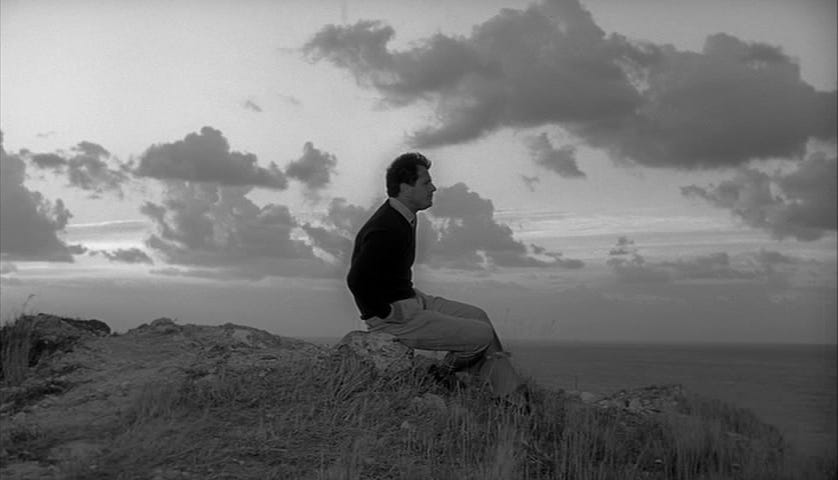
The cultural marathon phenomenon that is Love Island (USA) has concluded this month, and Love Island (UK) wraps up this week. Both programs, which air almost nightly, have served as a balm against the pangs of summer writer’s block. Whenever my brain gets too cooked trying to write The Spread, Love Island, in all its simplicity and post-language truth, lulls my mind into sweet, blissful nothingness. I’d be in the throes of imposter syndrome and, as part of a complex series of participatory cultural rituals, log on to the “Love Island USA App” to see content like a photo dump labeled “The Faces were Face-ing,” and think, God, to be alive, even for a moment, without the burden of thought. The notion of a group of beautiful young people driven to madness and obsession while trapped on an island and observed by an all-knowing lens may seem superficial, but if you think about it, that conceit forms the basis for so many of our greatest cinematic works. Watching Love Island, I thought so often of Fårö,3 the island off the coast of Sweden where Ingmar Bergman lived and worked, inspiring his most acclaimed movies, like Through a Glass Darkly (1961), Persona (1966), and Shame (1968), included here, in which an artistic couples tries to flee a Civil War in Sweden by hiding out on a remote island—only for their interpersonal relationship to deteriorate while they are trapped together. In Michelangelo Antonioni’s L’Avventura (1960), a man arrives on a remote volcanic island while romancing one woman, only to take up with her friend when she mysteriously disappears, the interpersonal conflict mapped to the environs. And Roberto Rossellini brought Hollywood star Ingrid Bergman out to the volcanic island of Stromboli, off the northern coast of Sicily, to star in Stromboli (1950), his film about a Lithuanian war refugee who marries a fisherman to escape a concentration camp and quickly becomes disillusioned with her impoverished existence—Rossellini and Bergman (then both married to other people) fell in love in that remote space, resulting in a child, and the ensuing scandal almost destroyed Bergman’s career (she was denounced in the United States Senate!). Nicolandria could never.
The movies in this program tell stories of transformation fueled by island sojourns, in which the twin flames of love and hate forge people into entirely new beings, and the landscape itself seems to shape and influence the interior lives of its characters. In these films, isolation, for better or worse, turns travelers towards their companion(s), their only respite from the terror of boredom. People go mad, fall in love, come of age, uncover dark secrets about themselves and others, go off the grid, fight pirates, sumo wrestle, turn old suspiciously quickly, get their groove back, and reunite with their loved ones on disco ships. Celebrate the end of summer’s most-addictive psychological experiment with this high-minded iteration!
The Stuff that Dreams are Made of: Humphrey Bogart
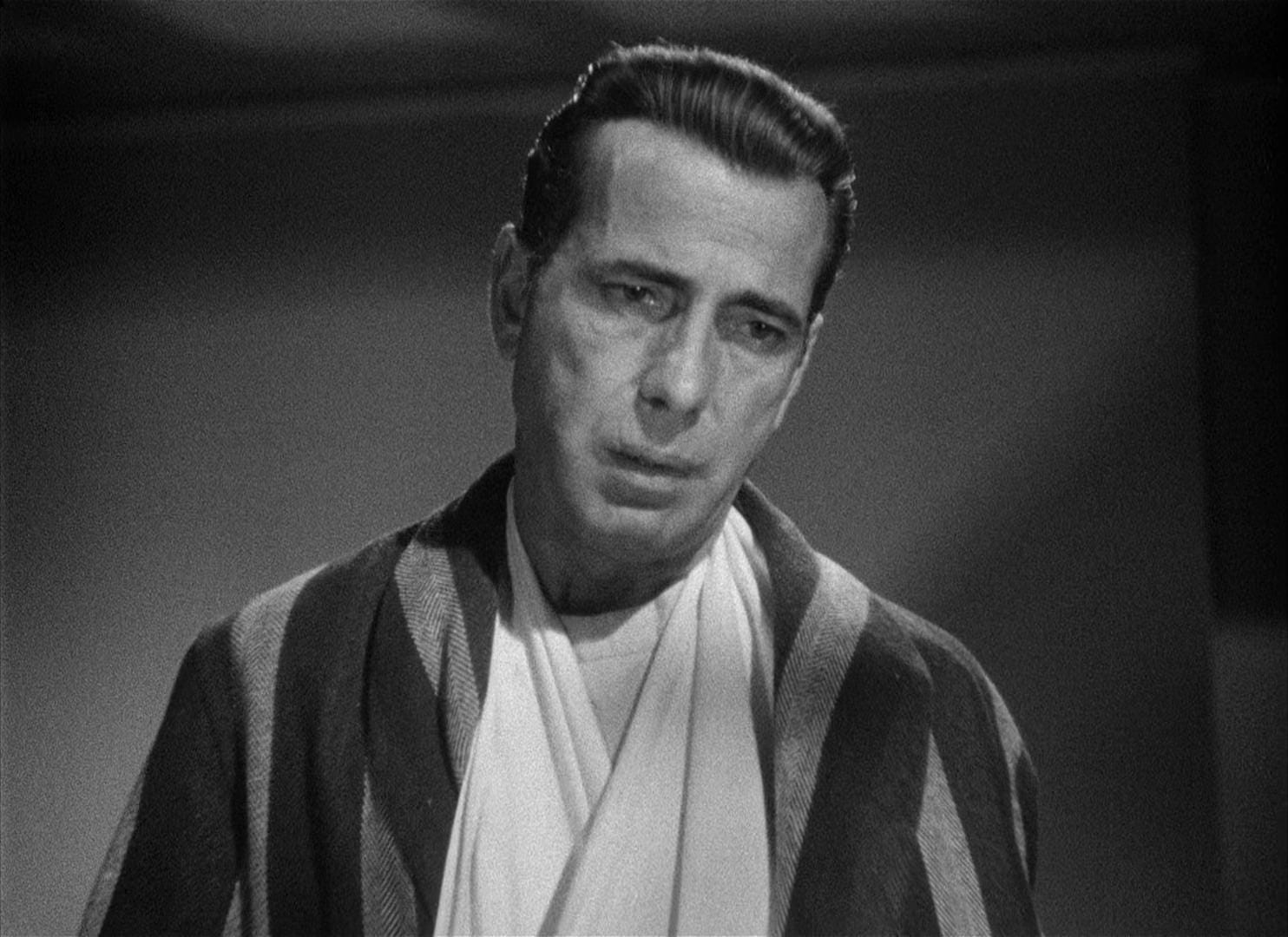
There’s a version of Humphrey Bogart who looms large in our cultural imagination—a snarling, suit-wearing, smokes-like-a-chimney caricature of pure id who doles out one-liners in between casual seductions and stick-ups. He’s been parodied and lovingly referenced in Looney Tunes and Woody Allen romantic comedies and soft rock standards, his signature lisp and scarred lip exaggerated in pantomime. He’s the masculine ideal: ugly but sexy; short but towering; gruff but considered. He’s the shorthand for a whole era, and the blueprint for mannered, early 20th century masculinity. At the dawn of the French New Wave, in Jean-Luc Godard’s Breathless (1960), wannabe thief Jean-Paul Belmondo admires a poster of The Harder They Fall (1956), Bogart’s final film, mumbling, “Bogie” in recognition. Standing before a picture of Bogart in the window of the cinema, he thumbs his lip, a simple act of emulation that tells us everything we need to know about the character (and everything we need to know about the obsessions of the postwar French): he’s putting on an act, posturing as an American tough guy. Everything he knows about crime, he learned from the movies—Bogart doesn’t even play a “tough guy” in The Harder They Fall, but a washed-up writer pulled into a crooked scheme to promote a sub-par boxer. Belmondo’s little moment? It’s drag.
Here’s how the legend of Bogart gets told: the leading man gets cast as legendary P.I. Sam Spade in The Maltese Falcon (1941), John Huston’s breakthrough adaptation of Dashiell Hammett’s 1930 novel of the same name, one of the great American detective novels. Caustic, embittered, confident, and fatalistic, Bogart as Spade is hypnotic, epitomizing the prototypical private dick at the heart of what we now refer to as “film noir.” He’s turned into a star overnight, a coup that’s only beaten when he fronts Best Picture-winning Casablanca (1942), the beautiful, letter-perfect tribute to missed connections, poor timing, and the human toll of war—and the fight for a better world. He plays Rick, the depressive proprietor of “Rick’s Cafe” in the lawless space of Casablanca under German wartime occupation, who is unwillingly reunited with Ilsa (Ingrid Bergman), his great love lost years prior during the invasion of Paris, and her husband, a Czechoslovakian freedom fighter (Paul Heinred); he must decide whether to help them out of Casablanca, or continue helping himself. In Casablanca, Bogart is a taciturn ball of resentment, who still can’t fight his natural impulse to help others—even at his own expense. “I’m no good at being noble, but it doesn’t take much to see that the problems of three little people don't amount to a hill of beans in this crazy world,” he laments to Ilsa in the film’s famous final moments. But he is good at being noble. He’s so good at it, earning his first (of just three) Academy Award nominations for Best Actor (he infamously lost to Paul Lukas for the dreadful Watch on the Rhine).
Despite the war, hits followed, each envisioning Bogart as some cynical, unwitting good guy, making him the preeminent American “antihero,” including an incendiary pairing with “man’s man” director Howard Hawks that would forever impact the leading man’s life and career. In To Have and Have Not (1944), Hawks’ liberal adaptation of Ernest Hemingway’s 1937 novel, Bogart plays a fisherman in Martinique unwillingly caught up in the French resistance. Nancy “Slim” Keith, Hawks’ husky-voiced then-wife discovered a teenage model named Betty Perske on the cover of Harper’s Bazaar, whom she pitched to her husband. Hawks cast the 19-year old actress, shot a screen test, and gave her character Slim’s look and mannerisms—molding the girl into “Lauren Bacall,” the ideal “Hawksian woman.” The “Hawksian woman” is a sexy, confident woman who can hold her own, yet never impedes: she’s available, yet never overbearing, allowing the man to go his own way while waiting for him to come back to her. Bogart fell in love with Bacall—or maybe this Hawksian version of Bacall—through the course of filming To Have and Have Not, the camera capturing their electric chemistry, which in turn inspired Hawks to expand Bacall’s part. Despite a not-insignificant age gap, and the fact that Bogart was technically married (to his third wife) at the time, the public ate it up, and within a year, the two were married, remaining together for the rest of Bogart’s life. Onscreen they built a cinematic legacy that’s the stuff of Hollywood lore, complimenting each other through a very specific formula: she pursues, aggressively, while he sits back, content to let her romance him while he does all the thinking—and gun-slinging—for both of them. She pushes, seducing him (and us) through loaded innuendo and sex appeal (slyly evading the Hays Production Code standards), while he yields, in passive appreciation:
The pairing proved so successful it begat three more movies, all of which are held in high-regard, and might loosely be termed “film noir,” though none are as sexy as To Have and Have Not and the next picture the pair made with Hawks, The Big Sleep (1946). After perfecting Sam Spade, Bogart was ripe to tackle Philip Marlowe, the other great American gumshoe. Raymond Chandler’s grizzled private investigator, first introduced in the 1939 novel of the same name, is a hard-drinking, world-weary dick with an ability to tease out twisted, impossible schemes and crimes. And while Bogart was not the first (nor maybe even best) man to embody Marlowe—that distinction belongs to Dick Powell in the underrated Murder, My Sweet (1944)—his performance remains the most popular, and definitive, iteration of the man, thanks to Bogart’s self-effacing charisma, sexual confidence, and sly sense of humor. This iconically incomprehensible film deliberately obscures the actual story of the novel in favor of vibes, with Bacall playing Marlowe’s high society love interest, the daughter of a client who hires him to find his former protégé. “You’ve got a touch of class, but I don’t know how far you can go,” Bogart observes of her, teasing out a horse betting metaphor. “A lot depends on who’s in the saddle,” she purrs in response.
It’s easy to see why the movies Bogart made with Bacall, and at the height of his stardom, are so beloved by classic film fans. Dark Passage (1947), in which Bogart undergoes plastic surgery to evade capture for allegedly murdering his wife, is easily the weirdest (and most formally interesting) of their pairings, shot in experimental subjective POV, with the camera acting as the leading man’s eyes, up to the point he removes the bandages from his head and “emerges” as Humphrey Bogart. Dead Reckoning (1947), a noir classic, pairs him with genre queen Lizabeth Scott, a carbon-copy of Bacall (down to the husky voice), embodying one of the all-time great “femme fatales”—he knows she’s no good, but he just can’t help himself. And Key Largo (1948) stars Bogie and Bacall, one last time, as a veteran and the widow of his fallen comrade, respectively, who fall in love while trapped in an inn in the Florida Keys under the dual threat of a deadly hurricane outside and a deadly gangster (Edward G. Robinson) inside. The same year, Bogart gave one of his most interesting (and fully-realized) performances under his Warner Bros. contract as a dim, rapacious roughneck who is dragged into a gold prospecting scheme in The Treasure of the Sierra Madre (1948), his long-delayed follow-up with real-life friend and drinking buddy John Huston. Set in Mexico, Bogart stars opposite Tim Holt and Huston’s real-life father, Walter Huston, as three people brought together for a dangerous get-rich scheme, which unravels under their own paranoia and in-fighting. Bogart is surprisingly unlikable in this movie, leaning more towards the “anti” than “hero” side of his typical formula—he’s vain, greedy, short-sighted, and uneducated, all things that make him a perfect rube for a difficult job (and perfect for instigating its downfall). It’s a glimpse of what Bogart could do when let off the leash of expectation—a condition that would plague his entire career.
Anyway, that’s generally how the story of Bogart’s legacy gets told.
The real story of Bogart’s acting career is far messier—and less glamorous—than popular narrative holds. Long before Bogart became one of Hollywood’s leading men, he was stuck in a revolving door of studio typecasting, mostly playing gangsters, or tough guys, or lawmen who act tough, in support of other, bigger stars. He wasted so much of the prime of his career fighting for a way in the door that when he finally arrived, he was solidly middle-aged. A heavy-drinker and two-pack-a-day smoker, he was dead by 57 after years of illness that took a visible toll on his body, aging him even further. Thumbing through Bogart’s filmography, it’s a remarkable collection of some of the greatest films in classic cinema history—not all of which he is particularly great, or even notable, in. Classics like Dark Victory (1939), The Roaring Twenties (1939), and Angels with Dirty Faces (1938) see him in bit parts that make frustrating use of his considerable charm, and while he does his best to lend these characters some heft, there’s little to make them much more than glorified thugs and/or working class stiffs. What makes Bogart so interesting a performer is not in the way that he broke through, in one fell swoop, with The Maltese Falcon, but how his performance in The Maltese Falcon was the result of years of toil against the confines of the studio era, and generic expectations. Under the standards of the Hays Production Code, which policed his entire career, the bad guy was always punished, and could never be too likable, lest they inspire the audience to pursue a wicked life of crime, imperiling the American Way. But Bogart found a way to imbue black-and-white criminals with shades of gray, and with time, these performances would become increasingly sophisticated, until he graduated entirely to more-sympathetic “antiheroes.”
Bogart, a stage actor initially specializing in “juvenile roles” (affluent young bachelors who more accurately reflected his own tony New York upbringing as the son of a surgeon and commercial illustrator), shuffled between Broadway and Hollywood in the early 1930s, never really landing anywhere. That changed when he signed a contract with Warner Bros. in 1936 after appearing in the original Broadway production of Robert E. Sherwood’s 1935 play, The Petrified Forest, to acclaim. Playing “Duke Mantee,” a gangster character modeled on real-life criminal (and folk hero) John Dillinger, Bogart starred opposite British thespian Leslie Howard (best known to modern audiences for his work in Gone with the Wind), the play’s producer. When Warner Bros. bought the screen rights to the play, they wanted to replace Bogart with an established star, but Howard, who maintained production rights, refused to move forward unless Bogart was given the part. The studio relented, and the terrific film version, which also starred Bette Davis, helped establish Bogart in Hollywood (he later named his daughter Leslie in gratitude towards the late star, who was shot down by Nazis in 1943). Bogart’s Duke, who forever transformed the course of his career, is a gruff, crass monster of a man, but his odd compulsion towards compassion, and playful sense of humor, is relatively complex compared to the generally non-distinct heavies in similar genre fare of the era.
No longer associated with society men, Bogart was instead put on a steady diet of gangster parts, playing second fiddle to established studio stars like Edward G. Robinson, James Cagney, and George Raft (a decision that has aged particularly poorly), none of whom maintain the same fervent cult of personality nowadays. But he was smart, working with what he could get. When Raft, who had real-life mob ties, turned down the leading part in William Wyler’s Best Picture-nominated gangster classic Dead End (1937) for being too “too unsympathetic,” Bogart took up the mantle, playing “Baby Face” Martin, an infamous mobster who returns home to his East Side tenement neighborhood only to find that his mother (Marjorie Main) hates him and his former girlfriend (Claire Trevor) is now a sex worker living with syphilis. Completely disillusioned, he plots the kidnapping of a rich child, sending him on a collision course with the police. That kind of thorny material was no problem for Bogart, desperate for a break, and willing to bring to life such tough, unlikable scoundrels. Bogart similarly convinced Raft to refuse a gangster part in the underrated, low-key delightful It All Came True (1940), about a criminal who turns his boarding house hide-out into a nightclub out of sheer boredom, arguing the part was beneath him: under Raft, it was, but Bogart lent the man an offbeat charm, making it hard not to root for him.
All his efforts seemed to pay off when he landed the part of “Roy “Mad Dog” Earle,” a gangster with a strong sense of personal ethos and righteousness clearly modeled off of Dillinger, in High Sierra (1941), a gangster / deconstructed Western classic from Raoul Walsh, who directs a script by John Huston. Earle, a proper anti-hero, is not altogether a bad guy, which makes his run from the law tragic, as he tries to flee the one thing that scares him: incarceration. The film’s stunning final sequence, in which Earle flees into the mountains to shoot it out with the cops, is a strangely ambiguous love letter to crime as resistance. The success of the film made a proper leading man out of Bogart and gave scribe John Huston the industry power to direct his first film, The Maltese Falcon, released the same year, which would make Bogie the good guy for a change (albeit one with a situational moral compass).
Bogart benefitted from the star system—it is unlikely, for example, that a star of his caliber and political leaning could have survived the Hollywood blacklist era without the benefit of a studio protecting him,4 as has been speculated—but it also severely limited him in a professional sense. He spent half his career typecast, leaving him with a little over a decade to prove his mettle as an actor, and Warner Bros., with whom he had a famously contentious relationship, tried to hold back that talent at every turn. His relationship with the studio deteriorated after he founded his own production studio, Santana Productions, in 1948, making a series of mostly-forgotten pictures, as well as one of his best.
In a Lonely Place (1950), adapted from Dorothy B. Hughes’ 1947 novel of the same name, was Bogart’s second collaboration with cult icon director Nicholas Ray after Knock on Any Door (1949), the first Santana Production, which is perhaps most notable for being an adaptation from a novel by Willard Motley, a Black author and Chicago Defender columnist who lent the film the chilling mantra “Live fast, die young and have a good-looking corpse!” In a Lonely Place takes as its subject an alcoholic Hollywood writer whose hopeful, newfound romance with a neighbor (Gloria Grahame) unravels after he’s accused of murdering a hat check girl last seen at his apartment, plaguing her (and the viewer) with doubt. The film, which operates both as a lurid film noir and a gut-wrenching look at isolation and loneliness, carried on the back of its famous leading man at his grizzled, morally-fraught best, remains ambiguous about Bogart’s culpability throughout, asking us to decide whether we truly suspect this man capable of a terrible crime, or suspect him because of his erratic nature and obvious flaws. Bogart plays it so well, you almost root for him regardless—surely such a pathetic creature deserves some respite from the consequences of his own actions?
Loser Bogart, such a far cry from his star persona, flourished in this late era, offering some of the actor’s best performances. In 1951, he won his sole Academy Award for his well-regarded performance in John Huston’s The African Queen, a romantic Technicolor adventure film about a crass, working class steamer captain (Bogart) who escorts a marooned spinster (Katharine Hepburn), stuck in WWI-era Africa after her missionary brother is killed, to safety, developing a strange bond in the process. Simply put, it’s not my cuppa tea, and Bogart’s win feels more like a lifetime achievement award, but he deserved an Oscar solely for the film’s hellish location shoot, which he alternatively spent drunk in a tent with Huston or waist-deep in water. Ironically, he stole Marlon Brando’s Oscar for A Streetcar Named Desire (1951), but Brando, with On the Waterfront (1954), got him back by stealing Bogart’s rightful Oscar for The Caine Mutiny (1954), which I personally feel to be the actor’s best work.
Adapted from Herman Wouk’s Pulitzer Prize-winning 1951 novel of the same name, The Caine Mutiny—which, believe it or not, inspired Michael Caine’s stage name—depicts the fallout of a “mutiny” aboard a U.S. Navy destroyer-minesweeper captained by an aging, disruptively strict lieutenant commander (Bogart) during the height of World War II. After weeks of escalating tension caused by the commander’s poor decision-making and ever-mounting paranoia, the crew begin to suspect he is unfit for duty and simply chasing past glories. When the ship’s executive officer (Van Johnson) assumes command during a typhoon, the elderly commander, humiliated, brings mutiny charges, resulting in a court martial. The executive officer then tries to prove his innocence by demonstrating the commander’s mental instability on trial. Bogart’s performance of that instability, carefully concealed by the pomp and rigidity of military structure, is just phenomenal. Acting “against” type as a defensive neurotic, he’s all raw nerves, bruised pride, and uptight posturing, rather than the cool, calm, and collected Bogart we’ve always known. It’s a fascinating subversion of his usual work, getting at the heart of what we love most about Bogart: he can make you care for any poor bastard, no matter how nasty.
Bogart’s health rapidly declined in the 1950s, but he starred in a few more eccentricities—like Deadline – U.S.A. (1952), a prescient, progressive noir from “social issues” writer/director Richard Brooks, which tells the story of a legitimate, poor-selling newspaper that’s about to be sold off to a tabloid rag, with Bogart as an editor rushing to break a big story about a gangster before it folds. Buried in the wake of The African Queen, it’s never gotten its due. Then there’s Beat the Devil (1953), John Huston’s own parody of The Maltese Falcon penned by Truman Capote and filmed on the Amalfi Coast, which TCM once called “one of the most peculiar films to appear from a major director and star in the 1950s.” A subversion of classic Hollywood tropes, the film was a bit notorious at the time of release for being universally disliked (no one got it, nor understood what to make of the tone), but it has found fans over the years, thanks to a witty screenplay performed in total deadpan by its talented cast of Hollywood expats (and a crew that included Stephen Sondheim, allegedly onset as a clapper boy). There’s an unlikely romantic pairing with rising star Audrey Hepburn in Sabrina (1954), a sparkling romantic comedy from Billy Wilder seriously elevated by its leading lady’s charm and ability to wear haute couture. She plays the daughter of a rich family’s chauffeur, who begins an ill-fated romance with the family’s youngest son, a rich playboy played by William Holden, with whom Hepburn had an equally ill-fated offscreen affair. Bogart, perhaps uncomfortable with the obvious age difference, plays his role—as the “responsible” older brother she ends up with—rather paternal, lending the character a sexless sweetness that’s totally anathema to the obvious sexual chemistry between Hepburn and Holden. Again, you root for him to win the far-younger girl, not because it’s appropriate, but because Bogart makes you want for his lonely, beleaguered bachelor to win for a change.
This program looks back on the whole career of a true Hollywood icon—named the greatest American screen legend by the American Film Institute—who invites quick, easy judgements (and impersonations), but is actually a more interesting performer than any shorthand might suggest. Everything that made him so unlikely a leading man is what gives the characters he plays such unforgettable textures. “I’m not good-looking,” Bogart allegedly once remarked. “…What I have got is I have character in my face. It’s taken an awful lot of late nights and drinking to put it there. When I go to work in a picture, I say, ‘Don’t take the lines out of my face. Leave them there.’”
That’s all for July! We’ll be back (sometime soon) for more original streaming programming. Until then, remember: it may be the Devil, or it may be the Lord, but you’re gonna have to serve somebody...
Nowhere was that more damaging than Newark, the site of a 1967 rebellion against the abusive power structures / practices that harassed / disenfranchised the city’s new black majority (facilitated by white flight into the suburbs), the most notorious of a wave of similar racial uprisings across the country. It left several people dead and transformed the city, which has never really recovered. The incident is captured in the documentary Revolution ‘67 (2007), included here, as well as David Chase’s recent Sopranos sequel, The Many Saints of Newark (2021). I didn’t include American Pastoral (2016), Ewan McGregor’s adaptation of Philip Roth’s novel of the same name, which depicts the riots, because it’s really bad.
The first wave of “YouTuber movies” have truly been forgotten by the sands of time, with at least one completely available to watch (legally) online. Fred: The Movie (2010), based on YouTuber Lucas Cruikshank’s character “Fred Figglehorn,” premiered on Nickelodeon after failing to secure theatrical distribution. Not Cool (2014), YouTuber Shane Dawson’s directorial debut, seems unlikely to be reclaimed in the wake of his cat video crashout. Angry Video Game Nerd: The Movie (2014) made no attempt to differentiate itself from the YouTube channel that birthed it: James Rolfe’s “bad video game” review show of the same name, making it instantly irrelevant to anyone besides fans of the show. Smosh: The Movie (2015), from the show of the same name by YouTubers Ian Hecox and Anthony Padilla, is not even available on streaming, despite somehow scoring a real Hollywood assist through director / Bill & Ted star Alex Winter. And F the Prom (2017), from YouTubers “TheFineBros,” was a despised teen comedy long before the pair were “cancelled” in 2020 for appearing in blackface in a Shane Dawson video and facing allegations of fostering a racist work environment.
In Mia Hansen-Løve’s tribute to Fårö, Bergman Island (2021), a couple of Ingmar Bergman enthusiasts (Vicky Krieps and Tim Roth) travel to the island in question to attend a screening, only to find themselves inside of a Bergman film. “You know how hard writing is for me,” Vicky Kreips bemoans. “It’s torture. It’s self-inflicted agony. It’s blood from a stone.”
Bogart, a Liberal, was one of the leading faces of the Committee for the First Amendment, a group organized by John Huston that went to Washington in 1947 to protest the jailing of the Hollywood Ten, to a flurry of press, with both Bogart and Bacall in attendance. But when the press turned against their appearance on charges that they were Communists, Bogart gave an interview recanting his participation in the organization, an act that friend (and co-star) Paul Henreid took as a personal betrayal, ending their friendship. In his 1984 autobiography, Ladies’ Man: An Autobiography, Henreid, who was blacklisted over his participation in the photo op, intimates that the studio intervened on Bogart’s behalf (perhaps in exchange for a statement) as none of the other big stars on the trip faced the same fate as him, an independent: “None of the major studios were willing to have one of their stars blacklisted. They had enough clout to protect them.” Bogart, for his part, wrote an article for Photoplay in 1948 in which he declared, “I’m no Communist.”