
November 2025 Streaming
The Pope Believes in the Future of Cinema, and So, for the Record, Do I

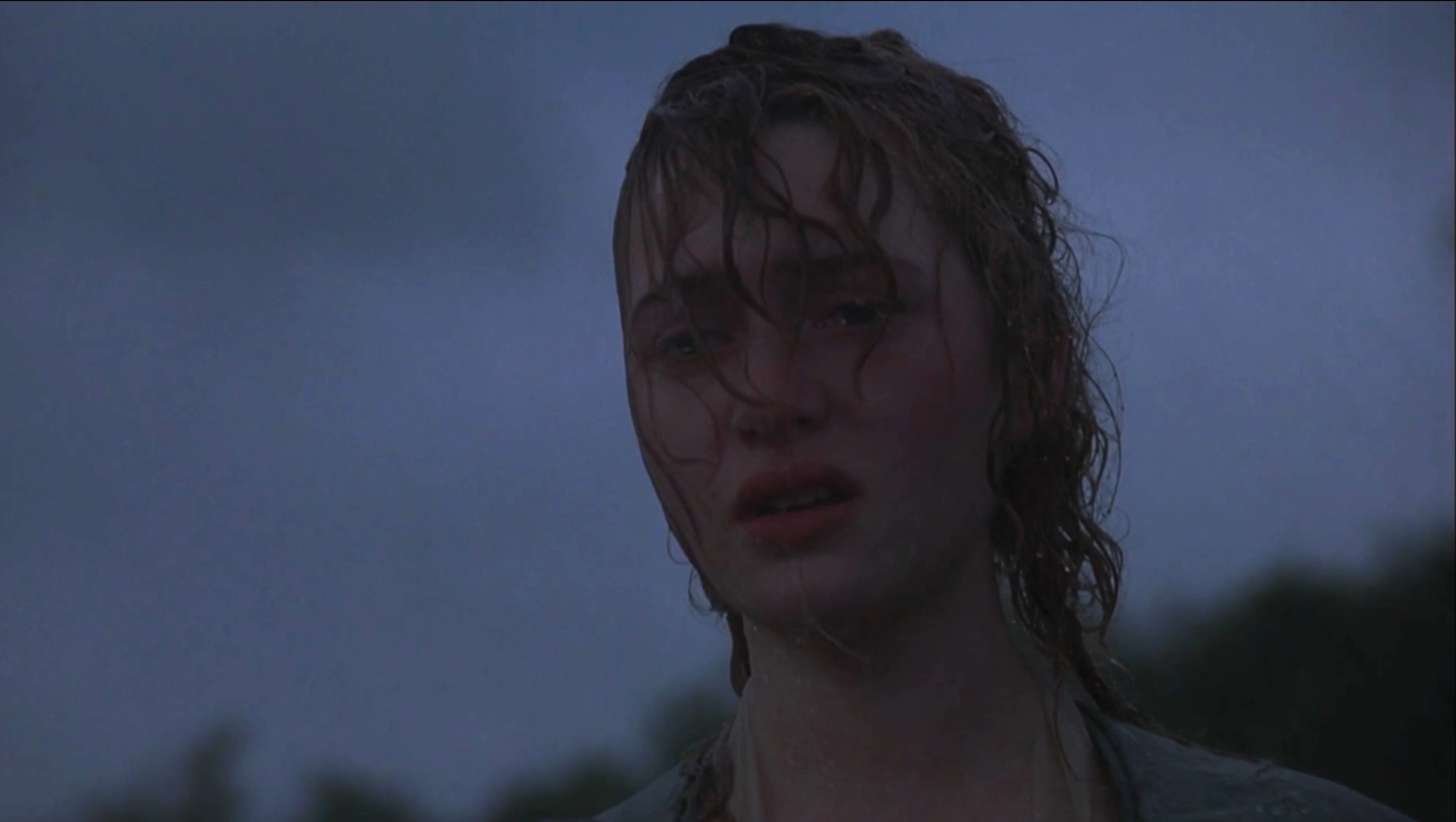
Welcome to November streaming, accessible, as always, here. Build my gallows high, baby, it’s the greatest time of year: Noirvember!
I’m late to the party but come bearing gifts: four all-new streaming in addition to our annual master “noir” list, with updated streaming information on all the grittiest, grimiest, and most fatalistic films you can possibly imagine. In that same spirit, we’re honoring one of the key players of noir this month, who was also one of the few female filmmakers contributing to the genre. The game is now afoot, the cat’s in the bag, and the bag’s in the river.
And what could be a more rewarding gift this time of year than the gift of cinema? (Keep an eye out for our Annual Holiday Gift Guide, dropping shortly). Chicago, a city I love so dearly, preceded Hollywood as a filmmaking hub, and in the here and now, we have a Chicago-born “Woke” Pope defending the art form directly from the pulpit. In a speech this week to an audience of filmmakers and creatives, he spoke eloquently in defense of fighting for challenging, artful cinema in the age of streaming slop: “The logic of algorithms tends to repeat what ‘works,’ but art opens up what is possible. Not everything has to be immediate or predictable. Defend slowness when it serves a purpose, silence when it speaks and difference when evocative. Beauty is not just a means of escape; it is, above all, an invocation. When cinema is authentic, it does not merely console but challenges. It articulates the questions that dwell within us and sometimes even provokes tears that we did not know we needed to express.”
Thank you Chicago Woke Pope! This rousing sentiment feels particularly relevant to this months’ newsletter, and the confounding, critical films that constitute our marquee streaming program, which examines how challenging art can complicate and subvert the easy assumptions and simple answers we often indulge in: even in bad times, it’s ok (even necessary) to seek out feeling worse!
We’re on the last leg of a long, incredibly difficult year, when hunkering down with a good film feels more restorative than any other time of year: people balk that the days have grown so dark, but maybe the relative lack of daylight is the universe’s way of gently encouraging us to watch more movies. I’ve got a couple of ideas:
Our Ignoble Past: Downer Period Pieces
“Nostalgia,”1 that fetishization of the recent past, or, more accurately, the warm, Pavlovian feeling engendered by our popular understanding of the recent past, is essential to late stage capitalism, which draws our attention to (and repackages) an idealized yesteryear to distract us from (and desensitize us to) an unpleasant present and an uncertain future. (A.I., it seems obvious to point out, only accelerates this drive, pushing us all towards one great Slop Singularity). We may seem more preoccupied with the recent past than ever before because of the internet, but it’s really nothing new: in his load-bearing essay “Postmodernism and Consumer Society” (1988), Frederic Jameson introduced the term “nostalgia mode” to articulate the way the proliferation of images in our mass-media culture erases or endangers “real” historicity in favor of a pop narrative of the past that is tethered to capitalism,2 messily comparing films as disparate as American Graffiti (1973) and Chinatown (1974) to The Conformist (1970) to Body Heat (1981) in the process. That read was famously…a little crazy, if you actually look at each of these films as individual texts. It’s true that these films each engage with the historical (and cinematic) past through recognizable visual signifiers filtered by contemporary sensibilities and preferences; that’s sort of the nature of period filmmaking (though Body Heat isn’t even a period piece, so let’s toss that out entirely). But these films do not all do this in remotely the same way: in fact, two of those films resurrect the past specifically to critique and correct false narratives of their era, while the other reinforces the hegemonic worldview of its time period. “For whom was it ‘just like that,’ I wonder,” legendary hater Pauline Kael infamously (but not incorrectly) sniffed about George Lucas’ American Graffiti, which reflects the predominant narrative of the midcentury, informed by shiny cars, popular music, and disposable income: all elements of a supposed last gasp of collective “innocence” before the sobering horrors of Vietnam. The critic went on to clarify, in the poorly-aged invective of her era, “Not for women, not for blacks or Orientals or Puerto Ricans, not for homosexuals, not for the poor. Only for white middle-class boys whose memories have turned into pop.”


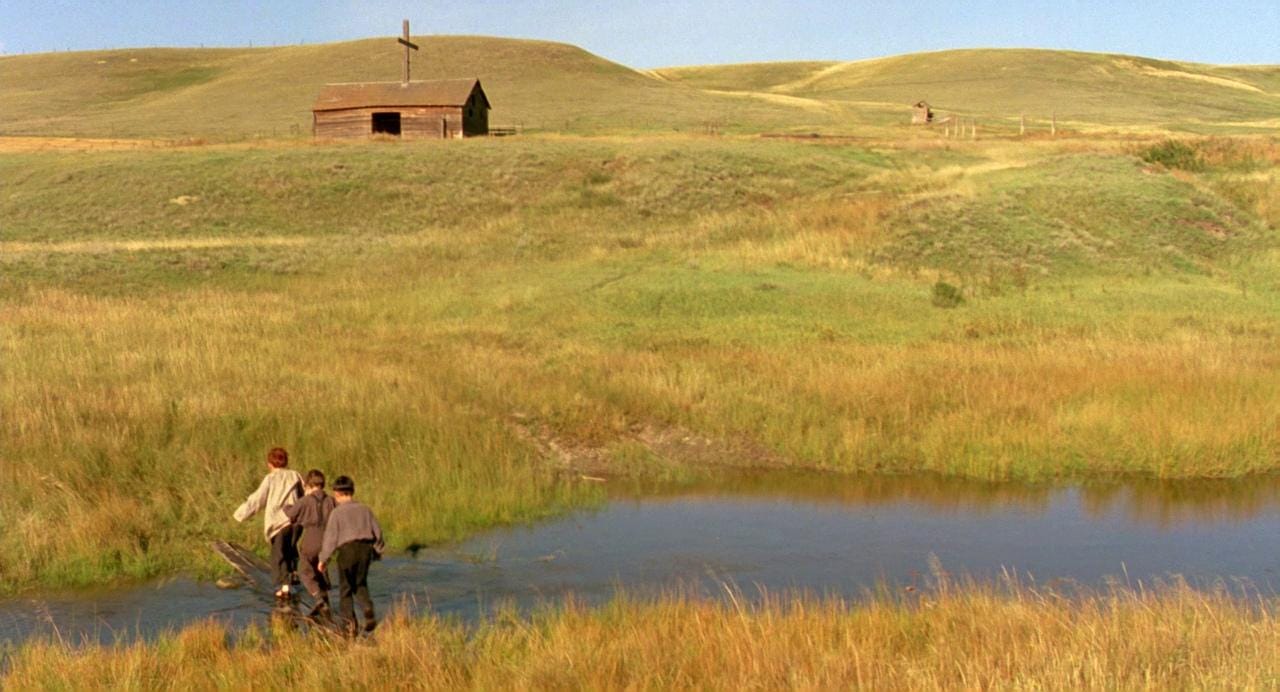
This program is not concerned with American Graffiti. This program, which I’ve dubbed “Our Ignoble Past,” is about those films that do the opposite: construct a world you’d never want to return to, challenging the very idea of nostalgia. Actually, it was inspired by Kelly Reichardt’s The Mastermind, currently in theaters, which picks up in the middle of the Vietnam War, capturing a country already itching to course correct from a few social justice gains. The thorny, tremendous films in this program could be described as “downer” period pieces: historical dramas conceived as criticism of their respective eras, deliberately constructed to subvert rosy historical revisionism, which can attempt to reclaim any disreputable era, no matter how horrific, with enough distance. The films in this program don’t just tell bummer stories of bygone eras, they strip away the attraction of the past, rendering it visibly desolate through muted and/or austere aesthetics.
Take the period pieces Jameson underestimated as critical texts: Chinatown—a damning interwar-set noir about a useless private investigator (Jack Nicholson) who fails to help a vulnerable woman from the abuse and exploitation of her well-connected, industrialist father—and The Conformist—in which a cowardly secret police member (Jean-Louis Trintignant) in Mussolini’s Italy conceals his otherness and shame behind subservience to the amoral fascist state—invoke feelings of nostalgia only so they can subvert the allure entirely. They do this narratively, but also on an aesthetic level, capturing their antiheroes in unsettling close-ups and trapping them in wide-angle frames that underscore how small they are compared to the larger systems of power (and historical whims) that govern their deeply unpleasant realities. What Jameson bemoans as the “stylistic recuperation of the American and the Italian 1930s” in these movies—chiefly the ultra-chic, iconic period costume designs by Anthea Sylbert and Gitt Magrini, respectively—belie the films’ comparatively unsentimental, stark visual styles, which conjure up bleak, hopeless worlds that no one would feel particularly inclined to return to, even in the hopes of wearing a smart suit set. All period films are not created equal!
The films selected here focus on the holes left in history: the real-life events downplayed, edited, or rearranged because they paint unflattering portraits of national history and identity, or subvert pop mythologizing that lionizes figures of wealth and power. As you’ll see, many were made in periods immediately following the collapse of old censorship standards in their respective countries, which opened up new possibilities for critical and/or subversive storytelling. These films engage with the visual language of the past, but also the visual language of our cinematic past, particularly the ones used to paint pernicious, nationalist narratives, like the great Hollywood cowboy flicks of the early 20th century, which helped whitewash Western expansion and genocide, plastering famous white fathers over actions that should be a source of national disgrace.
Contemporaneous films from the Great Depression, for example, infamously shied away from directly confronting the harsh realities of the period in favor of escapist art geared at an audience looking for solace from their real-life circumstances3; the gulf between the two realities feels downright surreal in retrospect. “How can we look ‘Prosperity’ when he’s got ‘Depression’ all over that pan of his?” Marion Byron snarks of her downer dance instructor (Frank McHugh) in Footlight Parade (1933), one of the frothy Busby Berkeley musicals parodied in a few films from this program, including Pennies from Heaven (1981), a postmodern musical about the gulf between the Depression on Film and the Depression in Practice (it is so bleak as to be almost unwatchable, which explains why it was not appreciated in its own time). In Hard to Handle (1933), scam artist James Cagney organizes a “dance marathon” contest played largely for laughs: through montage, a continuous dance contest lasting 1,412 hours (that’s 58 days) zips by at a playful speed, obfuscating the real-world horror of the concept (banned in New York in 1933). But Sydney Pollack’s They Shoot Horses Don’t They? (1969), the crown jewel of the program, captures the incredibly exploitative and dangerous nature of this Depression-era trend: people actually did die, or suffer from psychosis, while participating in them—lured in by the guarantee of food and shelter as much as a cash prize. Pollack crafts a claustrophobic, garish landscape and fills it with desperate, gaunt creatures, timed, like lab rats, to the strains of the victrola. It codifies the vagaries of the era, and the American pop psychology notion that prolonged suffering, however demeaning, is our bootstraps birthright: the first act of a triumphant comeback engendered by our own pioneer spirit. This thinking, it seems to say, will be what dooms us all:
“Believe me, these wonderful kids deserve your cheers, because each one of them is fighting down pain, exhaustion, weariness, struggling to keep going, battling to win,” the emcee (Gig Young) tells the sadistic viewing audience in They Shoot Horses Don’t They?. “And isn’t that the American way?”
[Our] Jane[s] Addiction: Jane Austen Adaptations
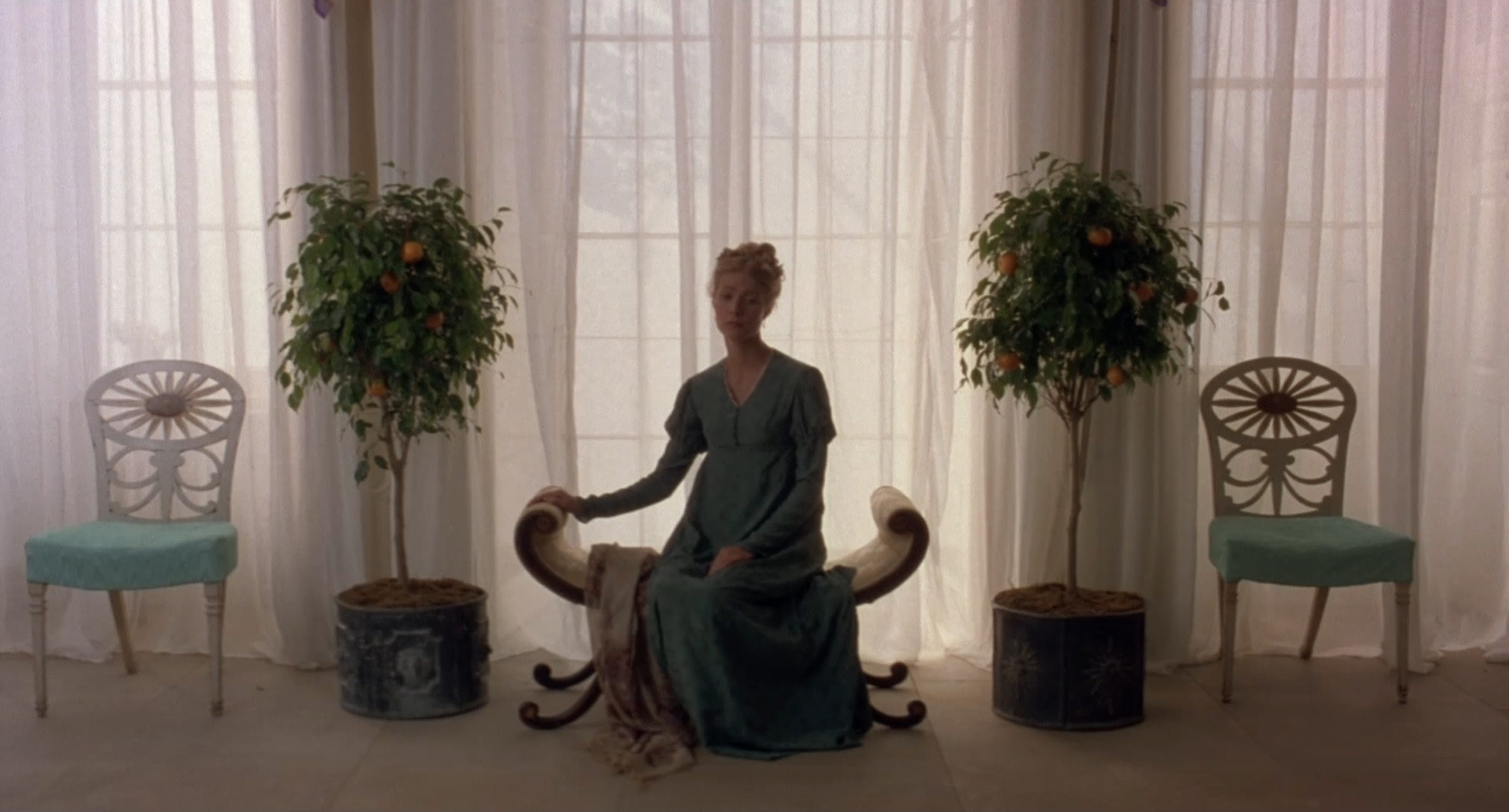
“‘Love is not love which alters when it alteration finds, or bends with the remover to remove,’ Marianne Dashwood (Kate Winslet), absolutely drenched, quotes from Shakespeare’s Sonnet 116 while standing atop a hill overlooking the family estate of her lost love, John Willoughby, in Ang Lee’s Sense and Sensibility (1995). “‘Oh no! It is an ever fixed mark that looks on tempests and is never shaken.’ Willoughby. Willoughby! Willoughby…”
Neither this scene, nor Shakespeare’s sonnet, appears in Jane Austen’s 1811 novel, which notes that Marianne and her ignominious suitor first bonded over a general love of the poets [William] Cowper, [Sir Walter] Scott, and [Alexander] Pope. But in her Academy Award-winning screenplay, star Emma Thompson incorporates Shakespeare’s poem to convey Marianne’s devastating romantic sensibility, forged by enchanting literature, which makes her vulnerable to a dangerous man who nearly brings about her ruin. Winslet’s committed performance, Michael Coulter’s lush photography, and Patrick Doyle’s rich, heart-wrenching score all align in this moment atop the hill to convey something that is both beautifully overwrought (just go inside Marianne!!! before you die of the common cold!!!) and painfully relatable: who among us, particularly in our impressionable youth, has not suffered so acutely from the aches of a broken heart?
Sense and Sensibility (1995)4 is the platonic ideal Austen adaptation: a heavily abridged (but thematically faithful) rendering of Austen’s first novel that relishes in the lush natural landscape of Devonshire/Devon as a balm to the Dashwoods’ economic destitution, in which acts of sewing, drawing, reading, performing, weaving, and gardening are tasks of quiet, calming repetition for women stuck in a precarious circumstance and subject to romantic humiliations. I wore out our VHS copy of the film long before I had my own experiences of heartbreak to compare it to: like Marianne, I felt like any manner of humiliation and suffering seemed worth it to experience true love, “to burn—to be on fire, like Juliet, Guinevere or Heloïse.” But I also found Marianne’s behavior so, so extra, and appreciated the good sense of her cinematic sister Elinor (Thompson), calm and placid in the face of her sister’s flightiness. This is the beauty of Austen’s original story, which posits the sisters in opposition to illustrate the poor coping skills of both: each could benefit to be a little bit like the other. The 1981 BBC miniseries adaptation of Sense and Sensibility even opens with the two sisters see-sawing up and down: yin and yang, give and take, heart and head.
The 90s were a great time for Jane Austen adaptations: in 1995 alone, Austen girlies feasted on Sense and Sensibility (1995), a commercial smash hit that garnered seven Academy Award nominations including Best Picture; Amy Heckerling’s cult classic Clueless (1995), a “modern” retelling of Emma; the BBC miniseries adaptation of Persuasion (1995), which proved so popular it actually received a theatrical release stateside; as well as the iconic BBC miniseries adaptation of Pride and Prejudice (1995), which introduced the world to Jennifer Ehle—as the intelligent, independent Elizabeth Bennet—and Colin Firth—as the taciturn, proud Mr. Darcy—in what many consider to be the definitive takes on the roles. Two Emmas followed the following year: a beautifully-shot theatrical version starring a woefully miscast Gwyneth Paltrow (who is, despite her best efforts, Not British), and a superior (if incredibly economical) television film starring the beguiling Kate Beckinsale (and a bewigged Mark Strong, incredibly, as Emma’s longtime love Mr. Knightley). The decade capped with Mansfield Park (1999)—which, while not the most faithful rendering of the source material, gamely attempted to modernize Austen’s thorniest novel, long debated by critics and scholars for its brief, ambiguous discussion of the slave trade and the role it played in the accumulation of British wealth. The 90s whet our appetite for cinematic, evocative renderings of Austen’s work, long associated with stuffy televisual costume dramas shot on sterile, closed sets on smaller budgets.5 These works sparked a cultural obsession not just with Austen’s works, but with Austen herself, and the world she inhabited: the beginning of Pax Britannica (1815-1914), in which the British Empire, victorious in the Napoleonic Wars, established itself as the hegemonic world power, with hands in everyone else’s pies. In other words, the moment when the eighteenth century truly became the nineteenth, and Great Britain, the world’s foremost economic and military power, fashioned itself the center of the civilized world; the so-called “heritage style” of late 20th century filmmaking, employed in these works, reinforced this historical narrative (and fueled our obsession with an abstracted, “genteel England” of yore).
Austen gifted us six novels in her 41 years: Sense and Sensibility (1811), her first published work, in which two radically different sisters struggle to find happiness after losing their father, estate, and wealth in quick succession; Pride and Prejudice (1813), her most beloved novel, about a scheming matriarch determined to marry-off her gaggle of daughters to well-heeled suitors; Mansfield Park (1814), her most confounding novel, in which a shy young woman is sent to live with abusive relatives by the family who can’t afford to keep her; Emma (1816), which follows an unrepentant amateur matchmaker who is ill-prepared to experience her own romantic happiness; Northanger Abbey (1818), Austen’s much-maligned parody of Gothic novels published after her death; Persuasion (1818), her posthumous novel about a spinster who looks back in regret at the loving, if socially disadvantageous, engagement she was encouraged to break off by sanctimonious relations; and Lady Susan (1871), an epistolary novel, and her first completed work, about a scheming flirt fleeing news of her own scandalous conduct, never submitted for publication. There’s a sprinkling of other works out there, including Sanditon (1817), never completed, yet adapted to a British miniseries in 2019 nonetheless. All were published anonymously, owing to Austen’s gender; all are romance novels, part of a larger contemporary literary movement.
Though not especially popular in their time, Austen’s work grew in popularity after her death in 1817, when her novels were reprinted and republished for new audiences and became fashionable in literary circles; an 1869 biography by Austen’s nephew brought new interest in her life and work, and adaptations for stage, then radio, and television eventually followed. Pride and Prejudice was first adapted for television in 1938, though the broadcast is unfortunately lost. The oldest surviving Austen adaptation is MGM’s star-studded 1940 theatrical film starring Greer Garson and Laurence Olivier, which is sort of infamous for its inaccuracies: perhaps because of the massive success of Gone with the Wind (1939), all the women are festooned in hoop skirts, rather than historically accurate empire-waist gowns, and Garson, at 36, is a bit of a stretch to play the 20-year old character of Elizabeth Bennet. Several serials and feature films (of Emma and Pride and Prejudice at least) followed, though many are lost; this program assembles all that remain. All of them!
If the 90s paved the way for Austen in the monoculture, the 2000s were peak Austen: Bridget Jones Diary (2001), following in the footsteps of Clueless, adapted Pride and Prejudice for the modern romcom era, even casting Colin Firth, Mr. Darcy himself, as “Mark” Darcy, a “prematurely middle-aged prick” who loves Bridget, a woman who cannot cook, but who we love…just as she…is. Then came Joe Wright’s painfully beautiful Pride and Prejudice (2005), which legitimized Pirates of the Caribbean star Keira Knightley and broke with many established conventions of Austen adaptations, emphasizing form in translating Austen’s text for a modern audience and conveying the heroine’s interior life through highly-stylized, defiantly modern sequences. This version proved so popular, a 20th anniversary re-release of the film earlier this year matched its initial opening weekend box office. British television, not to be beaten at their own game, subsequently introduced “The Jane Austen Season,” churning out more complex renderings of Austen’s work like Persuasion (2007), Sense and Sensibility (2008), and Emma (2009). This program covers them all, including the films of this era inspired by Austen’s life and work: from the corny, underrated delights of The Jane Austen Book Club (2007)—it’s fun!—to the surprisingly sexy Becoming Jane (2007), which placed the author in her own Jane Austen Adaptation to get in on the Longing and Heartbreak. And yes, we’ve included failed aughts “modernizations” like From Prada to Nada (2011), a (very loose) Sense and Sensibility adaptation clearly ripped-off of Martha Coolidge’s (!) equally-maligned Duff sisters classic Material Girls (2006), a true snapshot of the era that is not available on streaming services. (No nostalgia mode, but everybody stream “Mature” by Hilary Duff).
Despite our fetishization of the trappings of Austen’s world (“Jane Austen weekends” remain a popular vacation/dress-up event, including at Austen’s former Hampshire cottage) and the allure of the formalities and rituals of Regency era, our love for Austen, and Austen adaptations, endures because of the remarkable, timeless quality of her writing. We still respond to her sparkling wit and dry sense of humor, remarkable power for observation and social/cultural critique, and tremendous compassion for her leading ladies, all of whom contain rich inner lives underserved by the transactional, rigidly governed world around them. Her stories invoke tropes and ideas that somehow still feel relevant to our own lives, in recognition that yearning and romantic contemplation are as important—if not more so—than any physical act of affection: receiving a letter, getting stuck in a vehicle with someone you hate, attending a party with an odious man who wants you, running into an old flame, gossiping, matchmaking, making an ass out of yourself in a social setting, getting embarrassed by an uncouth relation, being made to feel inferior, being forced to rid yourself of romantic delusion, and coming to terms with growing old, and the diminished cultural cache that comes with it.
The “Austen Adaptation” has been in a tough spot in the last decade or so, as recent iterations prefer greater distance from Austen’s sentimentality and sincerity: Pride and Prejudice and Zombies (2016) awkwardly shoehorns action/horror film elements to a traditional heritage production, pleasing no one; Emma (2020) employs a cloying, “ironic” tone that makes it feel like a rip-off of The Favourite (2019); and Netflix’s recent Persuasion (2022) adds Fleabag-esque, eye-rolling asides to the camera and anachronistic dialogue that suggests disdain for the source material, upsetting critics and Austen acolytes alike. None of these adaptations are particularly successful, because their writer(s) seem(s) to look down on Austen, as if they are superior to her moony musings because of their modern sensibilities (when in fact, this puts them at a disadvantage). The truth is none of us are better than Jane Austen or her “sentimental” daydreams, but perhaps our more cynical era impedes our ability to sincerely enjoy (and rigorously engage with) her work—a new theatrical take on Sense and Sensibility arrives next year, so we’ll find out. To me, the best Austen adaptations meet the material where it’s at: the sense of tragedy, loss, suffering, and inequality is all there, secreted away in the text; it’s up to us to see how it all translates into our (very different) world.
And Then There Were None Was Fun: “Closed Circle” Mysteries
Rian Johnson’s Wake Up Dead Man: A Knives Out Mystery (2025), the third sequel in his delightful Knives Out series, lands in theaters November 26 before being unceremoniously dumped into obscurity on Netflix. As much as the streamer tries to divide us, we should all make the effort to get to the theater for a film like this: a whodunnit kills with an audience. I can personally attest to this, as I saw Glass Onion: A Knives Out Mystery (2022) in the ridiculous one-week theatrical window the streaming service provided, and it crushed with an audience; imagine my discontent when it was later panned by viewers who watched it at home as some sort of second-screen experience to Phone Scroll Time. You gotta lock in on a whodunnit, man! How else are you going to figure out who dun it? Johnson’s movies follow in a rich cinematic tradition of over-the-top murder mysteries with sprawling casts like the Agatha Christie adaptations Murder on the Orient Express (1974), Death on the Nile (1978), and Evil Under the Sun (1982), as well as Neil Simon’s detective pastiche Murder by Death (1976), which stars Truman Capote (!), and The Last of Sheila (1973), a boat-based murder-mystery co-written by one-time roommates (not a euphemism, as far as I can tell) Stephen Sondheim and Anthony Perkins, who were inspired by the real-life murder mystery parties they threw at their apartment (talk about a joint slay!).
There are few conceits I love more than a “closed circle mystery,” a subgenre of detective fiction in which the sleuth solves a crime from a limited pool of suspects, all with a motive, means, and opportunity to commit the Dastardly Deed. Popularized by mystery authors like Dashiell Hammett, Agatha Christie, and Dorothy L. Sayers and adapted to stage, radio, film, and television, “closed circle” mysteries concoct a situation that limits a pool of suspects—everyone is trapped at a mansion or estate (which is sometimes haunted), or captive on a boat, or stranded on a train, etc., often alongside total strangers, all with elaborate pasts. A murder occurs offscreen, and the mystery is solved by a Great Mind, typically a Gentleman Detective (or a Spinster Detective), sometimes privy to information that has not been disclosed to the viewing audience. It’s part of a rich, entrenched storytelling tradition that predates the visual medium: in fact, detective fiction was so influential on modern life that it predates the normalization of real-life detective work. As Steven Johnson points out in The Infernal Machine: A True Story of Dynamite, Terror, and the Rise of the Modern Detective, the cultural idea of the detective, popularized in modern literature, preceded (and manifested) his widespread employment in urban police departments.6 Edgar Allan Poe’s C. Auguste Dupin, first introduced in The Murders in the Rue Morgue in 1841, is thought to be the first literary detective: he inspired Sir Arthur Conan Doyle’s Sherlock Holmes, who in term inspired Agatha Christie’s Hercule Poirot, who inspired Rian Johnson’s Benoit Blanc, and so on and so forth.
But I actually don’t really care at all about gentlemen detectives, or spinster detectives, or any detective, for that matter, which is why this is not a “whodunnit” program. My enjoyment of closed circle mysteries derives not from a Poirot or a Miss Marple or a Nick Charles, but from the sprawling cast of characters that populate the central mystery. I love the identities, dress, secrets, and attitudes of these fictional creations. I love ferreting out their motives and evaluating their mannerisms. I love when they’re picked off one-by-one, particularly if it follows a particular rhyme or pattern. I love the idea that they’re trapped in a cinematic space solely for my own enjoyment, especially if they’re played by someone famous and/or attractive. And contrary to the detective tradition, I love when a Layman is pushed into the unwilling role of Surviving and Solving the central crime, deputized by circumstance. Up with the proletariat amateur sleuth and down with the bourgeois private dick!
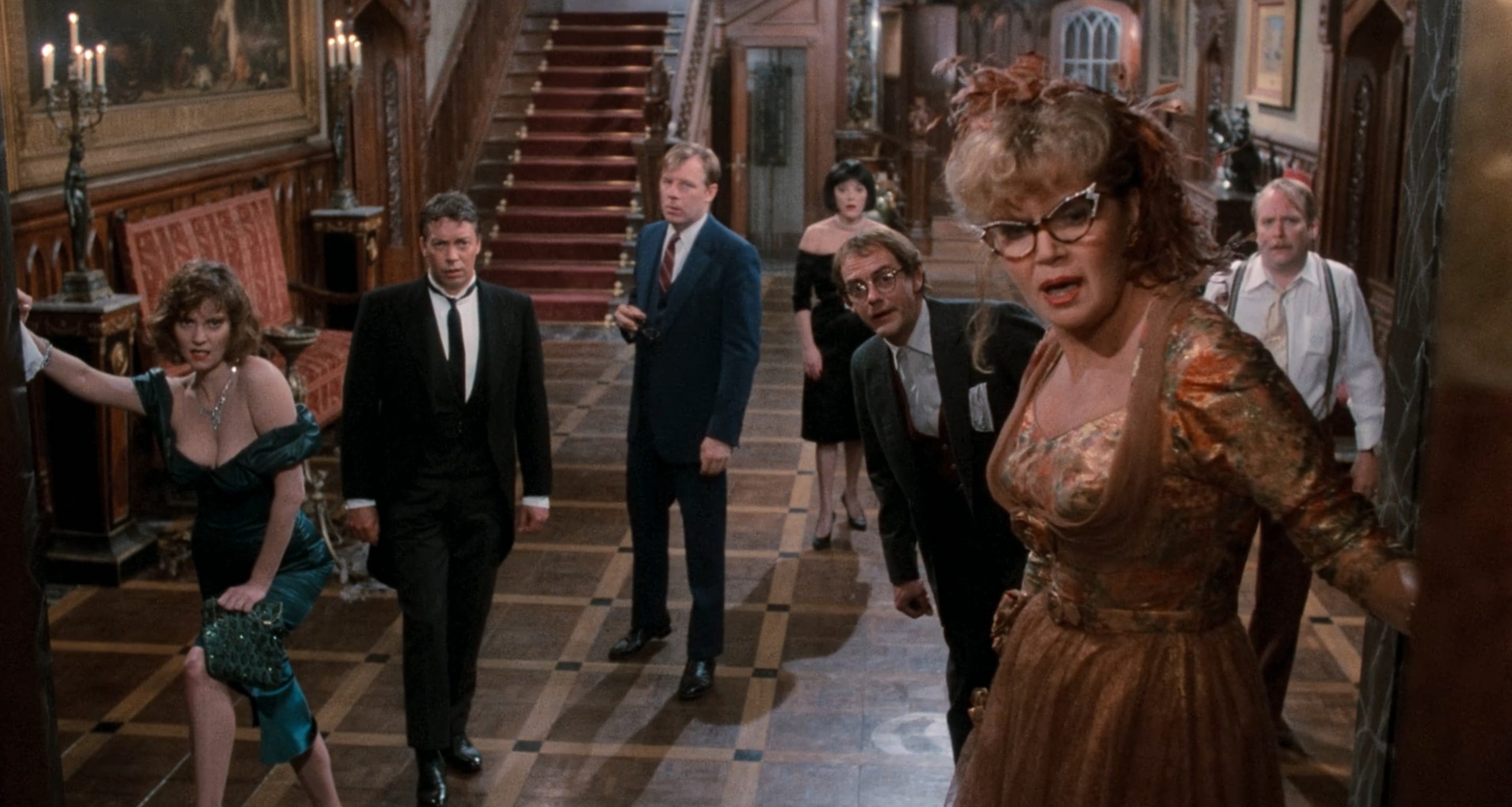
Here’s a murder’s row of closed circle mystery movies for your enjoyment, from the “old dark house” horror films of the 20s and 30s to the elegant country estate murder mysteries like Murder She Said (1961), Gosford Park (2001), and 8 Women (2002), to the many, many “horror house” comedies of the 1980s like House of the Long Shadows (1983) and my beloved Clue (1985), which begat a lifelong love of the genre. Plus: four adaptations of Agatha Christie’s And Then There Were None, whose original concept and title is too ghoulish to mention, but which birthed one of my favorite films to watch this time of year—René Clair’s effervescent, surprisingly scary 1945 adaptation, now in the public domain: “Very stupid to kill the only servant in the house. Now we don’t even know where to find the marmalade.”
The Hard Way: Ida Lupino, Trailblazer
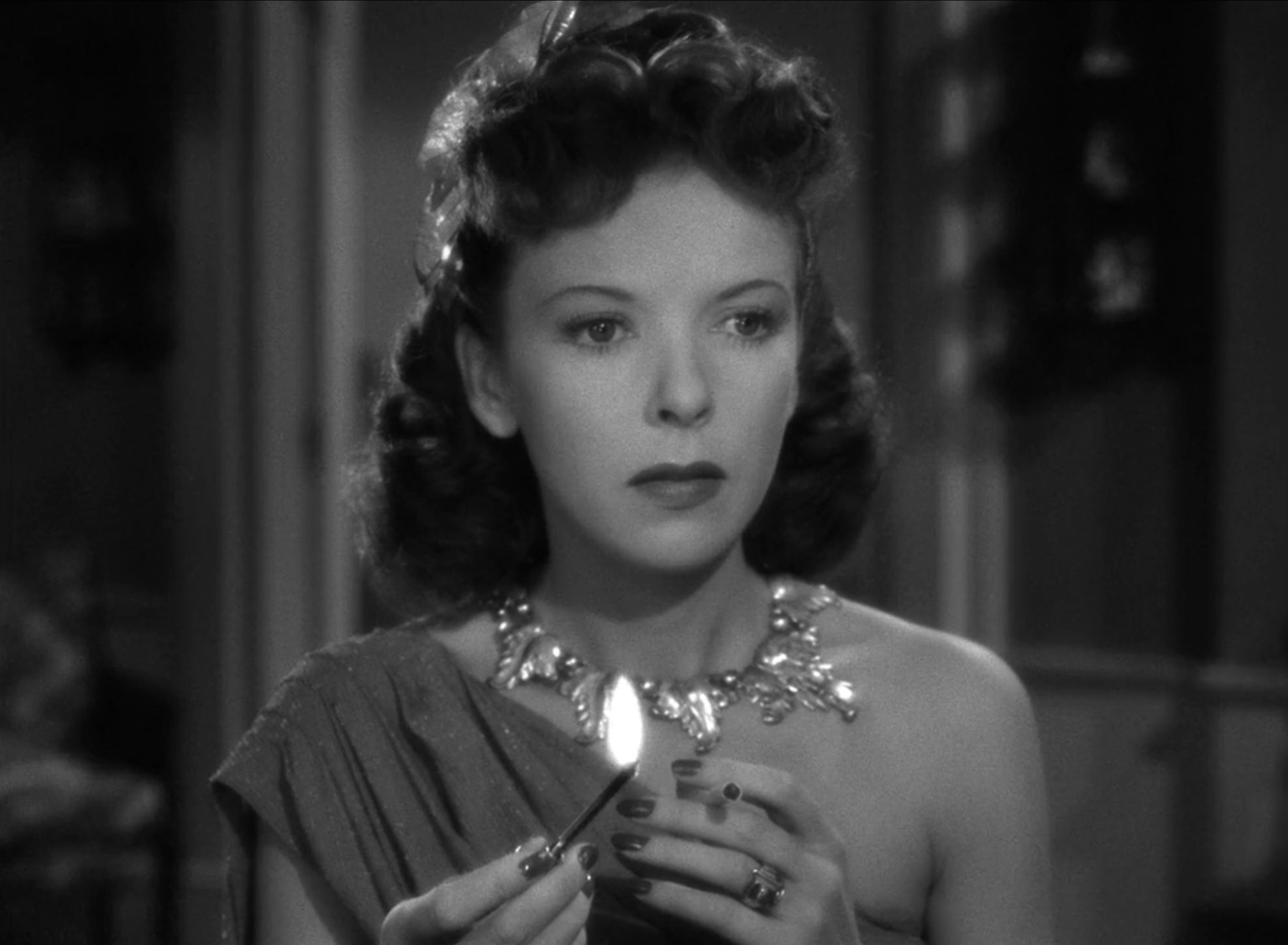
The laudatory label “mother” gets tossed around a lot these days, but Ida Lupino, a Classic Hollywood icon-turned-filmmaker who clawed her way through an inhospitable industry, making history in the process, actually asked to be called it on set: while directing as “Mother,” she could politely, gently ask the all-male crew to follow her orders, operating within a male’s world, to which she was an obvious outsider. She reportedly once said of her directing style: “I say, ‘Darlings, Mother has a problem. I’d love to do this. Can you do it? It sounds kooky but I want to do it.’ And they do it.”
This is the chief paradox of Ida Lupino: a siren who could actually act; a female filmmaking trailblazer who chose to uphold traditional gender roles and stereotypes rather than shake the table. What are we to make of such a woman? How do we reckon with her fascinating legacy? Her success in her own lifetime was limited: she received virtually no professional accolades from any awards body for her acting, beyond a New York Film Critics Circle Award for her tremendous lead performance in The Hard Way (1943). As a filmmaker, her best known work remains undersung noir classic The Hitch-Hiker (1953), one of six films she directed for the The Filmakers [sic], the independent production company she co-founded with her then-husband, writer/producer Collier Young, making her a key founding figure of the American independent film movement. Economics eventually forced her out of theatrical filmmaking, and she spent the last decades of her career largely directing episodes of television shows like Alfred Hitchcock Presents, The Twilight Zone, Have Gun – Will Travel, Gilligan’s Island, The Virginian, and Bewitched. She spent her final years consumed by alcoholism and broke from poor business dealings.
Sadly, it’s only in her death that we’ve come to appreciate her life.
A cult sex symbol best memorialized as a bit of trivia—she was one of the few women working as a director in an era of Hollywood rigidly governed by powerful male studio executives—Lupino’s actual body of work, constantly subject to reassessments and retrospectives, remains criminally underrated, despite famous champions like Martin Scorsese. On the occasion of her death in 1995, the legendary director (and classic film expert) wrote: “Far in advance of the feminist movement, she challenged the passive, often decorative images of women then common in Hollywood…what is at stake in Lupino’s films is the psyche of the victim. They addressed the wounded soul and traced the slow, painful process of women trying to wrestle with despair and reclaim their lives. Her work is resilient, with a remarkable empathy for the fragile and the heart-broken. It is essential.”
This program puts Lupino’s multifaceted body of work—as performer and director—in conversation with itself, underscoring the ways in which she subverted cultural ideas about femininity from behind a rigidly traditional facade. I’d argue that her filmmaking work was a natural extension of her tremendous work in front of the screen, frequently complicating the one-dimensional configurations of womanhood popular in big studio fare of the era. The women she played were often wisened by circumstance and sharpened to a fine point: hard, and often “bad,” but Lupino never reduced the characters to caricature. She had these big, round eyes that could fill up with tears, holding pain in place, communicating the rich, interior lives of her characters otherwise absent from the comparatively lean scripts she was given to work with. As an actress on contract at Warner Bros., she derisively labeled herself the “poor man’s Bette Davis,” frequently taking roles that the bigger star turned down (and frankly, wouldn’t have been able to play), but it wasn’t the only similarity between the two divas: like the similarly doe-eyed Davis, Ida Lupino was a real actress, with standards, who hated the commodification of women; like Davis, she balked at the demands of her home studio, frequently finding herself on suspension at WB for refusing bad parts. It was this career-hindering stubbornness that explains why her filmography is so comparatively solid after a certain point: she just gave a damn.
Lupino was born into one of Britain’s oldest theatrical dynasties—dating all the way back to a roving 17th century puppeteer who fathered a series of performing offspring, including a “George Richard Eastcourt Luppino,” apprenticed to John Rich, the originator of English pantomime. Luppino begat a series of actors, dancers, clowns, animal impersonators—Arthur Lupino, Ida’s great uncle, originated the role of Nana the dog in J. M. Barrie’s original 1904 staging of Peter Pan—and music hall performers, including her father, Stanley Lupino, a popular stage comedian in his time. Ida, who grew up around artists and intellectuals and received a worldly education, followed in her famous family’s footsteps, though her early flirtations with acting were sort of bizarre: despite attending the Royal Academy for Dramatic Art, she was typecast at the start of her screen career as “bad girls,” playing flirts, sex workers, and bleach-blonde bombshells, earning the label “the British Jean Harlow.” She won her second-ever screen role, in the British film Her First Affaire (1932), over her own tap dancer mother; Lupino was 14 at the time (sit with that one a second).

When the actress moved to Hollywood, her first studio, Paramount, had no idea what to do with the blonde teenager, sticking her in cheesecake roles in a series of forgettable flicks, the most notable of which are Henry Hathaway’s cult Gary Cooper fantasy Peter Ibbetson (1935), since reclaimed by classic film fans, and the super corny (but fun) first adaptation of Anything Goes (1936), playing an uncomfortably young romantic lead to a 33-year old Bing Crosby. Her first role with any real weight was that of a barmaid painted by an artist losing his sight (Ronald Colman) in William Wellman’s Kipling adaptation The Light that Failed (1939), a part Lupino apparently got by storming into the director’s office and demanding a chance to read on the spot; Wellman was impressed with her off-the-cuff performance, cast her, and fought the studio when it tried to replace her with a bigger name. Naturally, she was terrific: The New York Times wrote of her performance: “Ida Lupino’s Bessie is another of the surprises we get when a little ingénue suddenly bursts forth as a great actress.”
But it was her next film role that put her on the map: playing an embittered, married woman romantically spurned by George Raft in favor of “Oomph Girl” Ann Sheridan in They Drive By Night (1940), Raoul Walsh’s gritty melodrama about cross-country truck drivers (it’s a hard job!). Third billed and totally delicious, Lupino—a tiny wisp of a woman who carries herself like a heavyweight prizefighter—steals the show as a heinous character whose actions feel understandable, if not forgivable, given the closed-off nature of her sad, one-note life. It turned Lupino into an overnight star, and it also proved pivotal for co-star (and bit player) Humphrey Bogart, fourth-billed, raising his profile as a dramatic actor; he and Lupino would next star in Raoul Walsh’s gangster classic High Sierra (1941), widely regarded as Bogart’s breakthrough as a leading man before The Maltese Falcon (1941) made him a superstar. In High Sierra, Lupino—“the most sensational actress of the past year,” per the film’s trailer—once again plays a woman scorned: she’s a dance hall girl who falls helplessly in love with gangster Roy “Mad Dog” Earle (Bogart), going on the run as his glorified moll, even as he pines for another woman. Naturally, she plays a part in his downfall.
In these roles, Lupino embodies a different kind of woman than what we’d expect from the marquee name leading ladies of the era: she’s beautiful, but not beautiful enough; intelligent, well-rounded, and resourceful, but to no personal benefit. These qualities do not bring her happiness in life, and they certainly don’t win her the man (at least, not any man worth having). She’s always slightly on the outs: an underdog, plaything of the universe, looking in on other people’s happiness. The tighter she tries to hold on to what she wants, the more she reaches beyond her station in life, the harder she’s knocked down by the narrative.
Lupino’s work at Warner Bros. is a mixed bag, and she left the studio after playing a sheltered young woman in an abusive home who falls for a chain gang member in Jean Negulesco’s (apparently quite good) Deep Valley (1947), walking away from the offer of a new contract and starting her own production company instead. Many of the projects she appears in at the height of her career are films we’d retroactively designate as “film noir,” and have codified her later reputation as one of the key figures of the genre. In Charles Vidor’s underrated Ladies in Retirement (1941), she masterfully embodies a woman forced to sacrifice her own soul to ensure the survival of her mentally ill sisters, cruelly forgotten by the world. In Archie Mayo’s odd Moontide (1942), she embodies a depressed waitress who moves in with an alcoholic dock worker after he saves her from a suicide attempt; a bit of human flotsam that’s little more than a nuisance, even on her (potential) deathbed. In Vincent Sherman’s scathing showbiz melodrama The Hard Way (1943), perhaps her best role—modeled off of Lela Rogers, Ginger Rogers’ scheming, Commie-hating momager, who married her 17-year old daughter off to a more-successful vaudevillian to get her a leg up in the industry—she ruthlessly manages her singer sister’s vaudevillian career and hustles their way up out of poverty. Ultimately, as she must be, the character is punished for her own insatiable ambition, but Lupino injects so much nuance into the part that you actually find yourself rooting for her to get ahead, even as you know, morally, her actions are totally wrong. There were only so many options for young women to achieve something like independence in 1943, and Lupino’s onscreen attempt to secure it, whatever sacrifices must be made, feels proto-feminist in its configuration. These women are all desperate, intelligent beings scratching at the walls of their cages, trying to find a way out of a life predetermined by their gender and shaped by a world determined to humble them. Lupino’s proletariat characters illuminate a deep, dark truth about our recent past: until very recently, being an unmarried, working-class woman really did put you in an extremely precarious situation.
In 1948, Lupino, dissatisfied with the artificial mythmaking of the Hollywood Machine, formed The Filmakers to make socially-conscious, realist films from outside the Hollywood system. This was an incredibly bold undertaking at the time, given the tight hold the studio system had on all aspects of film production. As an independent studio, The Filmakers wound up self-distributing several of their own films, addressing taboo issues of the era that studios wouldn’t touch, and relying on recycled sets, inexperienced actors, and a realist filmmaking style anathema to the gloss and sheen of Hollywood. The Filmakers closed operations in 1955 due to lack of funds, but not before making twelve feature films, the most famous of which is Lupino’s The Hitch-Hiker (1953), “the story of a man, and a gun, and a car,” co-written with Young, which is sometimes tagged as “the first American film noir directed by a woman.” Inspired by the real-life story of spree killer Billy Cook, the taut, electrifying film tells the story of a fugitive who is picked up by two men returning from a fishing trip: a Good Samaritan act with deadly consequences. She first stepped behind the camera on Not Wanted (1949), the story of an abandoned, unwed mother, when original director Elmer Clifton suffered a heart attack and was unable to complete production—Lupino insisted on Clifton retaining the onscreen credit for the picture. Lupino’s other films of note for The Filmakers include Never Fear (1949), inspired by her own childhood bout of polio, which forever affected her health; Outrage (1950), a groundbreaking screen depiction of rape, and, most significantly, the trauma wrought by sexual violence; and The Bigamist (1953), which contains my personal favorite Lupino lore—she stars opposite Joan Fontaine, the new wife of Lupino’s ex-husband Collier Young, screenwriter of the movie, as women married to the same man!
Lupino joined the Director’s Guild of America in 1950, making her the second woman to do so (after Dorothy Arzner, Lupino’s personal idol), but there are a number of films made between her final Warner Bros. years and her later pivot to television that also showcase her considerable talents as an actress, including many movies that are now regarded as film noir classics, making her a perfect performer to check out this Noirvember. In Raoul Walsh’s surprisingly sophisticated, highly existential The Man I Love (1947), she plays a cabaret singer trapped in a seedy world that poisons her fragile romance with a heartbroken piano player; in Jean Negulesco’s terrific Road House (1948), she’s a tough-as-nails road house singer struggling to avoid the advances of her slimy boss (noir baddie Richard Widmark); in horrific domestic thriller Woman in Hiding (1949), she’s a woman literally on the run from her own abusive husband; in Nicholas Ray’s beloved On Dangerous Ground (1951), she convincingly plays a blind woman struggling to shield her mentally ill brother from a too-tough city cop; in The Big Knife (1955), she’s Hot Shot Actor Jack Palance’s long-suffering estranged wife; and in Fritz Lang’s While the City Sleeps (1956), she plays a journalist manipulated by George Sanders into transactional sex work for a story! I dare you to watch any of these noir offerings and not fall in love with Lupino, and the skillful, easy way she commands the screen, as if the cameras aren’t even there. They’re all certainly “B” pictures, and the “B” stands for “Baddie.”
She really was mother; you could even call her the “mother of American independent film.”
PLUS: Fives Years of Film Noir
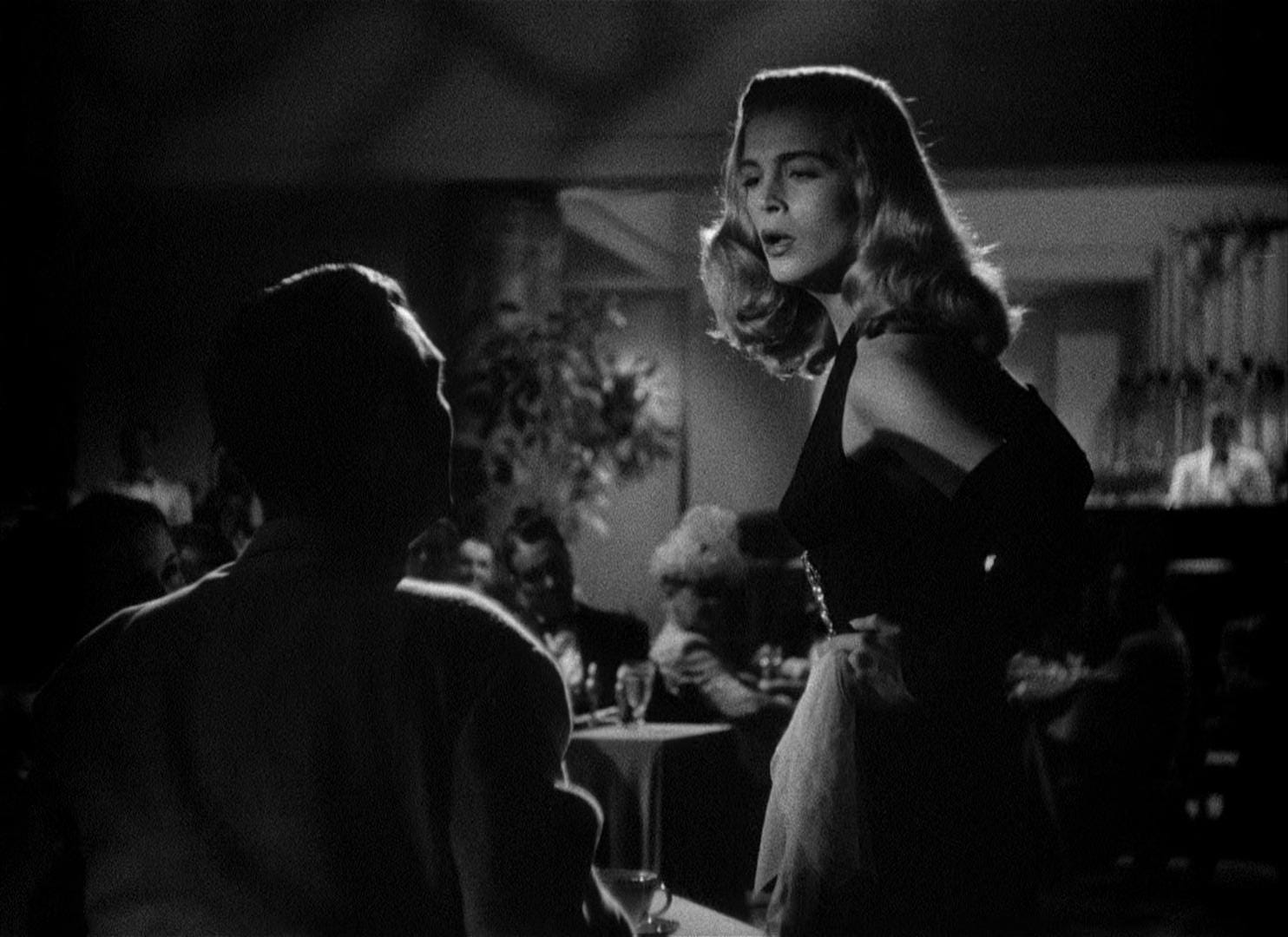
Finally, the return of our Master Noir List, now five years in the making, which provides viewing availability for over 200 film noir features, ranging from the Classic Hollywood Era to the present day, from all over the globe. Crooks, cops, dames, murders, finks, red herrings, racketeering, detectives, religious psychosis, boxing matches, nuclear weapons, carnivals, UFOs, plastic surgery, racism, longshoremen, bookies, sex workers, magicians, mental health, blackouts, hucksters, heroin, yakuza, tabloid journalists, the IRA, Jayne Mansfield, blood-soaked ice picks, cats, clocks, jewel thieves, horse races, androids, psychoanalysis, Laurence Fishburne, death by snowplow…I have such delights to show you in the wild, weird world of noir. Take a trip into the shadows as the weather turns chilly and darkness reclaims the better part of the day…
That’s all for November! We’ll be back next month with new programming, and our annual Holiday Gift Guide. Until then: I’ve come here with no expectations, only to profess, now that I am at liberty to do so, that my heart is, and always will be, yours.
Vince feels I should clarify the difference here between nostalgia as it is now understood (and weaponized by nativists), as “a sad pleasure experienced in recalling what no longer exists : a wistful or sentimental yearning for a return to or the return of some real or romanticized past period or some irrecoverable past condition or setting,” and its original definition of “the state of being homesick” for one’s hometown, once thought so dangerous it was classified as a psychiatric disorder.
Last month, the L.A. Times ran a piece on the big business of aughts nostalgia, citing the work of Rodrigo Muñoz-González, who coined the term “nostalgia economy” in his book Young People, Media, and Nostalgia. The piece discusses recent trends in everything from music to movies to politics: though nostalgia for the recent past is nothing new, the internet has facilitated mass appreciation for cultural products totally divorced from their historical realities.
A famous exception to this is “Remember My Forgotten Man,” the totally dark, absolutely scathing closing number of Gold Diggers of 1933 (1933), a musical criticism of governmental neglect during the interwar period. Nothing remotely this cool ever happened again in this era.
Next month, in honor of its 30th anniversary, Ang Lee’s Sense and Sensibility (1995) will actually be returning to theaters on December 16th, Austen’s birthday.
The 1980s saw the transformation of the Austen Adaptation, which moved from claustrophobic soundstages to the sprawling estates (and gardens) of Britain’s elite, a reflection of the so-called “heritage style” that became popular in the late 20th century, beginning with the BBC’s evocative miniseries Pride and Prejudice (1980). The “heritage film” classification was developed by leftists to criticize the centering of the bourgeoisie in mass-produced costume dramas about Britain’s past: most Britains in the “Regency era” lived in stifling poverty, after all.
“Despite their absence on the payrolls of big city police departments, detectives had played an outsized role in the European and American imagination for much of the 19th century,” Johnson writes in The Infernal Machine. “In many ways, the idea of a detective took root in fiction and only later migrated over to the real world.” This book is excellent, by the way.