
December Streaming
Does Anyone Mind if a White Boy Plays a Little Jazz This Christmas?

Welcome to December streaming, accessible, as always, here.
We’re running on fumes as we cruise out of this turbulent year: the tree is lit, the nog is strong, and Vince Guaraldi Trio is doing a lot of heavy lifting to instill that holiday cheer in a year when Christmas feels so blue, blue, blue, blue. Santa’s inventory is a little lighter this month as we head into the New Year, but we’ve got two new programs, as well as streaming info for all those holiday classics we love so dear, and isn’t that what really matters? When Harry Met Sally (1989), my cozy comfort watch this time of year, feels so melancholy in the wake of Rob Reiner’s horrific death; Family Stone (2005) is loaded without Diane Keaton; and Kiss Kiss Bang Bang (2005) rings somber with the loss of Val Kilmer, all in the same year. I’m singing “I’ll be grateful when you’re dead, you rascal you” to 2025: good riddance!
Elsewhere this month, I’m honored to have once again contributed to Film Comment’s Best of 2025 poll, in which I ranked 20 of my favorite films of the year—including new holiday classic ROOFMAN (guess you guys aren’t ready for that, but your kids will love it). I’m not saying my finger is on the pulse here, but my FC ballot was the only one in the bunch to include Kiss of the Spider Woman, and now there’s suddenly discourse about how underrated it was all over the internet. Just saying! Sit down, grab a seat, let me quickly play you out of this crazy-ass year…
I’ll Play It and Tell You What It Is Later: Jazz on Film
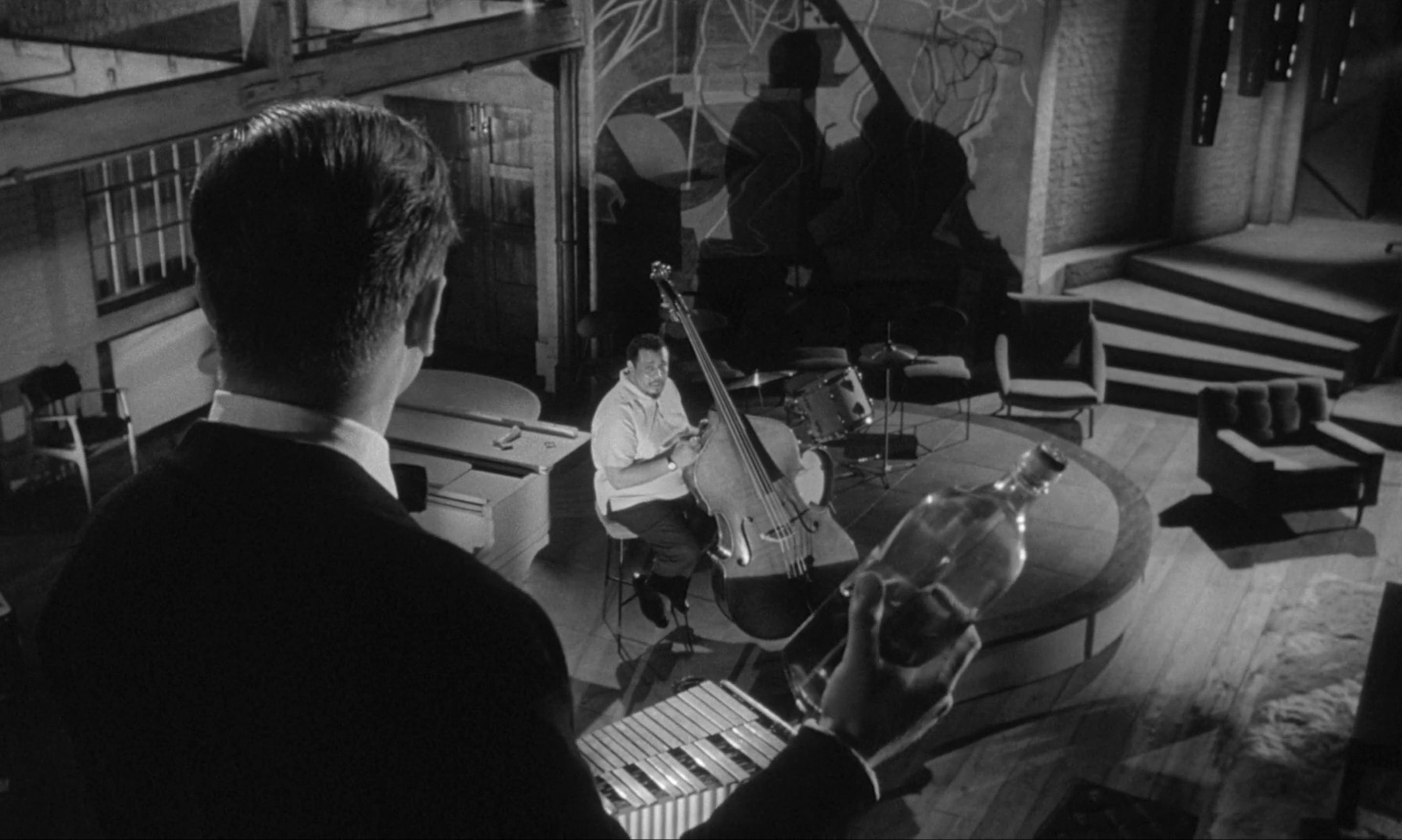
On a recent visit to the Norman Rockwell Museum in Stockbridge, Massachusetts, we took in a terrific exhibit, Jazz Age Illustration, which recounts the transformative nature of popular illustration and graphic design between 1919 and 1942. One of the pieces in the exhibit was “A Nightclub Map of Harlem” (1933) by pioneering black illustrator E. Simms Campbell, which depicts the popular nightclubs and speakeasies of the Harlem Renaissance, dotted with the colorful characters making up the rich, vibrant neighborhood at a time of artistic revolution. The illustration is full of fascinating little details and historical/cultural insights, particularly in depicting which jazz establishments are frequented by white patrons: if you peep the famous jazz nightclub the Cotton Club in the bottom left corner, you’ll notice the two rich white visitors arriving by town car, escorted into the establishment by a black doorman.
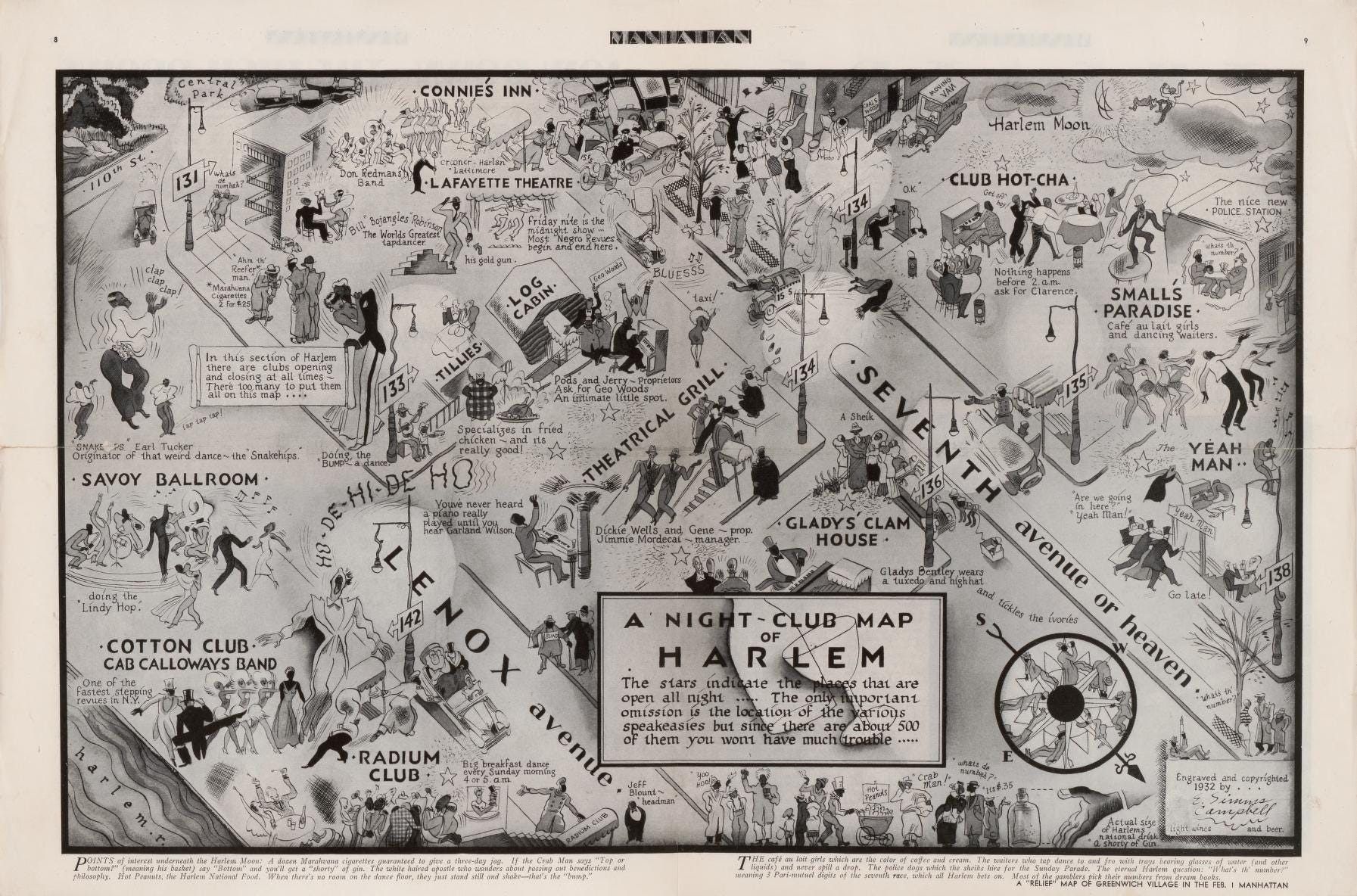
The Cotton Club, immortalized in a controversial 1984 film of the same name by Francis Ford Coppola, was a whites-only establishment, at least until 1935 (the same year as the Harlem race riot, an uprising over poor economic conditions and general discrimination faced by Harlem residents): black people could perform onstage, but not sit and watch. “I can’t even get my foot in the door of the Cotton Club where my own people, black people, are the stars,” Laurence Fishburne, as legendary black gangster “Bumpy” Rhodes, says in The Cotton Club (Encore). “Why? Because I’m black. There’s only two things in this world I have to do, Sandman: one is stay black, the other is die.” There’s a symmetry between the Cotton Club the venue and Cotton Club the movie, even with so many decades between them: jazz, despite its roots in black musical traditions and artistry, has always been filtered into popular entertainment and cultural institutions through white gatekeepers.
This program is about jazz on film, and it’s full of these kinds of tensions: jazz is ever-present throughout American film history, but because of film industry segregation (and the racism of southern theater owners, who would not platform black stories), it is almost always whitewashed and/or framed as ancillary entertainment within a white world.1 Consider the film New Orleans (1947), the only feature film to star jazz and blues legend Billie Holiday. The concept for the film stems from a conversation between bandleader Duke Ellington and Orson Welles (a big jazz fan), who planned to tell the history of jazz as part of an unfinished Latin America omnibus feature It’s All True, which was then cancelled by RKO; the segment’s screenwriter, Elliot Paul, then repurposed the concept for New Orleans (1947), which worked its way through the studio system (at a very different RKO) and re-emerged as a white love story. Here’s how that happens, per Turner Classic Movies:
More interesting for what it could have been instead of what it is, New Orleans started off as a starring vehicle for Holiday and Armstrong, cast as jazz artists who leave the south to seek their musical fortunes elsewhere. Through each new rewrite of the script, however, their parts became less and less prominent until they were finally reduced to secondary characters while a new storyline was fashioned around a romance between a white opera singer and a white club owner known as the ‘King of Basin Street.’ Typical of Hollywood’s treatment of many black entertainers during this era, this ‘new, improved’ version of New Orleans was obviously based solely on box-office considerations; the studio was afraid southern theater owners wouldn’t book the film with black actors in the leads, but it was also true that the largest majority of moviegoers in America at that time were white and not that interested in black culture or jazz musicians.
As one of the most visible figureheads of jazz, Armstrong, despite—or maybe it’s more honest to say because of2—the racism of his time, is one of the most overrepresented jazz musicians in this program (and in film history). The beloved, incredibly talented trumpeter and bandleader, whose career stems from vaudeville and minstrel show traditions, was frequently dangled before white audiences because his irreverent, mannered stage persona reinforced stereotypes about black performers—even as his big band sound fell out of fashion in the middle of the century, when a new generation of groundbreaking artists abstracted the genre into freeform sound, balking against Armstrong’s old-fashioned shenanigans (Armstrong famously called this bold new sound, bebop, “Chinese music”). After World War II, Armstrong even toured the world as an ambassador for American culture, including a controversial stop in the Democratic Republic of Congo, where his appearance was used as a front by the CIA to execute Patrice Lumumba, the first democratically-elected prime minister and face of the emerging pan-African nationalist movement, which sought identity beyond colonial rule of the continent. This story is recounted in last year’s terrific documentary Soundtrack to a Coup d’Etat (2024): Armstrong was one of several black jazz artists (unknowingly) used as fronts for covert operations in Africa, including Nina Simone, Duke Ellington, Dizzy Gillespie, and Melba Liston. Once again, the white hegemonic order felt that black people could perform on stage, but should have no control over what happened beyond the boundaries of that environment. Not that it kept them silent: jazz musicians Abbey Lincoln and Max Roach iconically staged a demonstration at the UN Security Council in 1961 in the wake of Lumumba’s death.
This program is a repository of all the genre’s fraught presence, from these problematic, limited early depictions in Hollywood fare; to the implementation of jazz scores in grittier, darker films after World War II like The Man with the Golden Arm (1955) and Sweet Smell of Success (1957); to the international reinterpretation of the sound as it made its way to other countries (particularly in Japan, where it exploded in popularity after the war); to the postwar concert and speciality films like Jazz on a Summer’s Day (1959) that captured live performances; to the desegregation of jazz bands and spaces; and to the jazz biopics at the end of the 20th century that finally began telling black musical stories on film. In addition to the cats named above, you’ll find music and performances by Miles Davis, Cab Calloway, Thelonious Monk, Fats Waller, Charlie Parker, Ella Fitzgerald, Ornette Coleman, Chico Hamilton, Chet Baker, John Coltrane, Herbie Hancock, Jack Teagarden, Charles Aznavour, the Preservation Hall Jazz Band, and so much more. See the British film noir that sets Macbeth at a Charles Mingus / Dave Brubeck jam session; Bessie Smith’s sole film appearance; a documentary unpacking the trans-masc bandleader who successfully toured as a man; and the French crime thriller classic set to a totally live score by Miles Davis. Not to toot my own horn (get it?), but this program really blows, man, I mean it really swings. Can you dig it?
You’re Alright, White Boy: Heroes that Move From Conqueror to Comrade
“I say, Japan was made by a handful of brave men,” Timothy Spall marvels/narrates in the opening moments of Edward Zwick’s aughts hit The Last Samurai (2003), in which Tom Cruise, a Civil War / Indian War veteran, trains the Imperial Japanese Army in the ways of western warfare, only to be kidnapped and transformed by Ken Watanabe, a charismatic daimyo leading a samurai rebellion, which Cruise then joins. “Warriors, willing to give their lives for what seems to have become a forgotten word: honor.”
The Last Samurai feels like a spiritual cinematic link between two televisual adaptations of Shogun, James Clavell’s 1975 historical fiction novel of the same name about an Englishman who crash lands in 17th-century Japan and winds up in the service of the Shogunate right before the closure of Japan’s borders to the outside world: a popular 1980 NBC miniseries, which starred Richard Chamberlain and Toshiro Mifune, and an acclaimed 2024 FX series that managed to center Japanese characters in a story of a white masculine outsider in feudal Japan. These three points of reference3 reflect a burgeoning American love affair with Japanese culture at the end of the 20th century, when wartime tensions melted, congealed, and transformed into interest (and fetishization), pegged on vague merits like “honor,” “respect,” and “tradition,” all divorced from their sociopolitical contexts and fueled by the export of Japanese film, television, and literature (the name for this program comes from a copypasta meme based on a random manga panel). The Last Samurai drew praise for its more thoughtful depiction of Japanese characters in Hollywood fare, but its central politics and fetishization of Japan’s warrior past are downright goofy: in real-life, the samurai, who were high-ranking lords, sat atop a deeply unjust feudal society, and were mostly fine with the changes brought by the Meiji Restoration because they were simply given jobs in government that reinforced their sociopolitical power.4 Zwick equates the noble samurai to Native Americans based on the galaxy-brained observation that both groups use bows and arrows in battle, and his samurai make their last stand against a modernizing Japan out of of a deep sense of nationalist pride: the way these people kill poor people is just way cooler, and the moment they put down swords and pick up guns is the moment they lose their way. Paging Yukio Mishima.
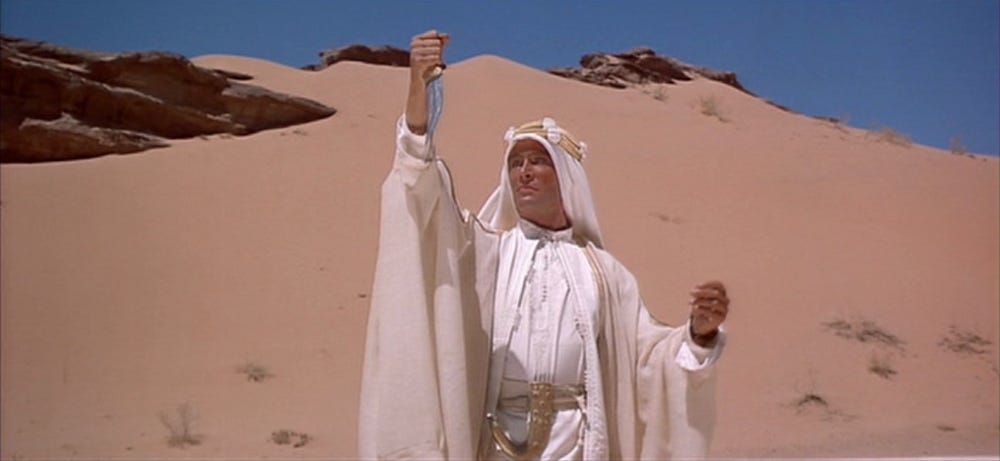
We watched The Last Samurai for the first time over the Thanksgiving weekend alongside another Zwick classic, beloved “male weepie” Legends of the Fall (1994), in which a patriarch and his three sons disavow the U.S. military over its treatment of Native Americans and move to a vast swath of land with their Cree friend; son Brad Pitt, who is trained by the Cree in the ways of hunting and living off the land, cannot ever truly fit within white society given his wild, untamable spirit. With Zwick,5 we began to notice a definite pattern: a white male protagonist, imperfectly aligned with the white imperial order, seeks out a place within another culture, earning a way in through mutual respect and adherence to a real (and imagined) code of honor, fighting alongside his newfound people. This is an enduring masculine fantasy: from the “going Native” trope so popular in western and historical fiction narratives—a man is kidnapped by or seeks out a Native tribe/primitive civilization, learning their ways and abandoning white society—to the white-centered “fish out of water” stories, like Lawrence of Arabia (1962), The Yakuza (1974), Mr. Baseball (1992), and Seven Years in Tibet (1994), to the White Guy Orders in Perfect Chinese, Shocks Patrons and Staff meme of the 2020s. It seems only more relevant as the corny, evil white men in Washington boldly embrace a politics of xenophobia, white supremacy, misogyny, and general inelegance, which has, to hear the internet tell it, reinvigorated the cultural cachet of “wokeness.”
The incredibly 2025 phenomenon of the “quirked-up white boy” suggests a cultural notion that there are white men capable of metaphorically shedding the skin that makes them so evil/pathetic: imminent Oscar nominee Timothée Chalamet, aka Lil Timmy Tim aka Muad’Dib,6 is promoting said Oscar performance by dancing to Soulja Boy’s “Crank That” in Brazil, accepting “White Boy of the Year” from NBA star Anthony Edwards at the “Believe That Awards,” and performing in a music video for U.K. rapper EsDeeKid (once, and maybe still, rumored to be Chalamet himself). Also this year: Justin “It’s Not Clocking to You that I’m Standing on Business” Bieber included a spoken interlude starring internet comedian Druski on his Grammy-nominated album, Swag: “Your skin white, but your soul Black, Justin.” (“Thank you,” Bieber mumbles in response). It’s a zillenial update of the passé “hood pass”—John Mayer famously dropped a slur while debating his own in a 2010 Playboy interview that continues to haunt him—which asks: with enough diligence, knowledge, and respect for his fellow man, can a white boy change his spots?
In honor of Avatar: Fire and Ash, the latest entry in Jim Cameron’s sprawling “Going Native” series out this Christmas holiday weekend, this program—which is completely neutral in its observation—looks at the cinematic legacy of white men trying to buck their god-given privilege, in worlds real and imagined, within real marginalized groups and alien metaphors, in ways “right” (observing and learning, joining in on anti-imperial revolution) and “wrong” (using the respect granted to horde power, i.e. becoming a “god,” and/or reinstating uneven power dynamics). These personal rebellions (almost) always ultimately uphold white supremacy and imperial power structures, but there’s a sense of individual valor and/or personal enrichment gained in the process, as men in search of self-actualization grapple with that so-called “forgotten word”: honor. (Surely words like “justice,” “fairness,” “equality,” and “peace” should carry more weight in an ideal society). We may think of the “quirked-up white boy” as harmless fun, but I think the individual desires that give birth to it run the gamut from benevolent to malevolent. “My greatest fantasy is to go off to some foreign land and become a legend of some sort, like The Man Who Would Be King7 or Heart of Darkness,” John Milius—co-founder of the UFC, one of our most talented (if totally evil) conservative filmmakers, and director of Farewell to the King (1989), which appears in this program—tellingly told Film Comment in 1976. “…The idea of a man going off to a primitive culture and becoming a legend and a god. As they say in Citizen Kane, ‘Lording it over the monkeys’.”
Few other white boys would be so openly racist, or honest, in articulating their desire to become Other.
Holiday Classics + Essential Jewish Cinema
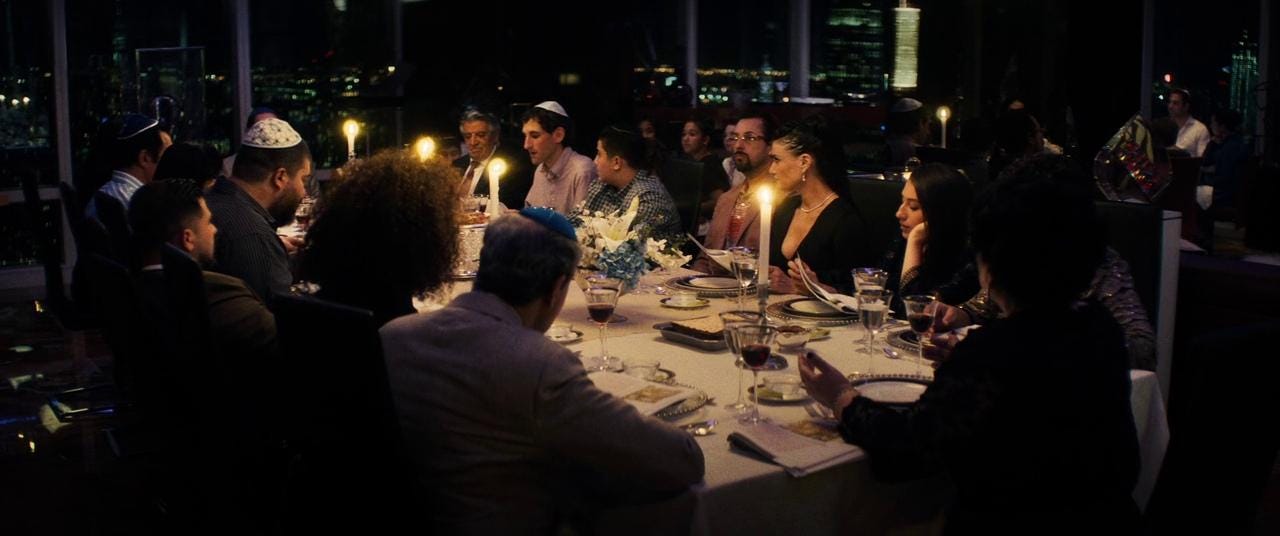
Here’s what you come for year after year: a collection of all those movies you just love to watch come Christmas and New Years, all in one place, with latest streaming information. Take in an old classic or discover something new (like, say, ROOFMAN). For the uninitiated: this program includes holiday (Christmas + New Years) films as well as Jewish classics to commemorate Hanukkah (since Hanukkah movies aren’t really a thing).
PLUS: Jane Austen Adaptations, Encore
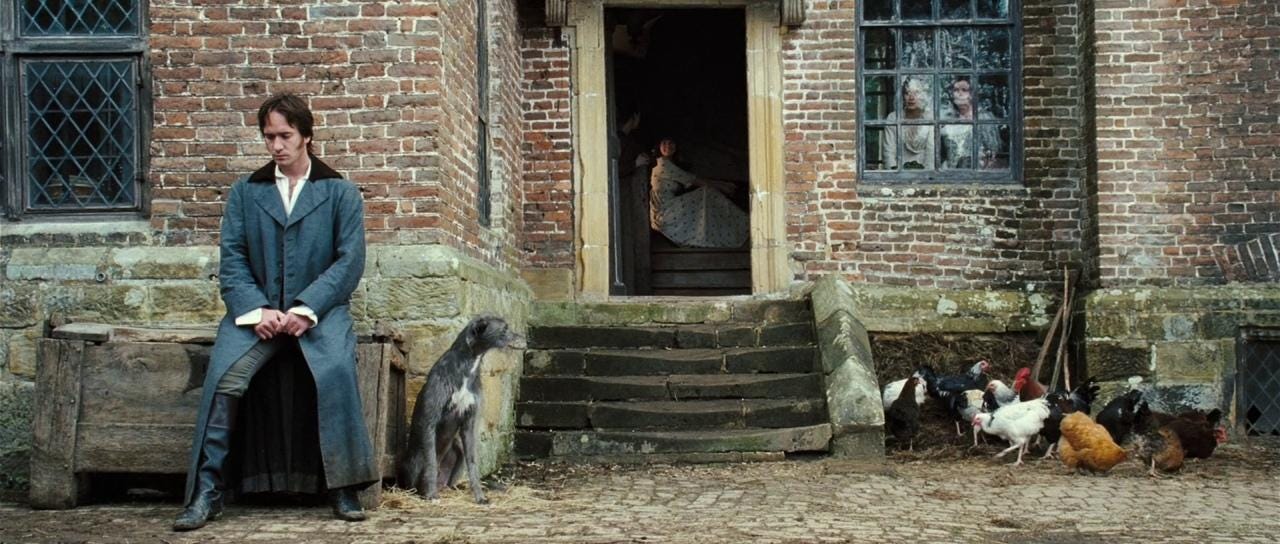
Jane Austen’s 250th birthday was this past Tuesday, inspiring a series of tributes and appraisals of her work, as well as some troll-ish discourse about the merit of her writing. And while I may have missed the recent Sense and Sensibility (1995) re-release (they didn’t put it in enough theaters!), I recently caught the ending on TCM, tearing up anew (you can watch it through Christmas on TCM On Demand). Take another lap around the parlor with this comprehensive collection of Austen adaptations, perfect for the holiday season. Follow the cues of Whit Stillman, Austen Defender, who drew on the writer’s work for his own holiday classic, Metropolitan (1990):
“But the context of the novel, and nearly everything Jane Austen wrote, is near ridiculous from today’s perspective.”
“Has it ever occurred to you that today looked at from Jane Austen’s perspective would look even worse?”
That’s all for December and 2025 for The Spread! See you in the new year with all-new virtual programs. I’ve been particularly low this holiday season and barely keeping it together. If you are too, please know that you are not alone. Remember, no man is a failure who has friends. And if you’re reading this, you’re a friend of The Spread.
There are a handful of jazz films that center black talent, like Dudley Murphy’s shorts Black and Tan (1929) and St. Louis Blues (1929) and all-black musical extravaganzas Cabin in the Sky (1943) and Stormy Weather (1943). However, these were all helmed by white filmmakers and heavily feature and reinforce cultural stereotypes about blackness.
In a 1963 television interview, Malcolm X called black celebrities like Armstrong “puppets and clowns” for the prevailing white hierarchal order.
In Shogun (1980), none of the Japanese spoken by Japanese characters is subtitled for the viewer, fueling our isolation (and alignment with Richard Chamberlain). Japanese dialogue in The Last Samurai (2003) is subtitled, but the film is largely communicated in English, aligning the viewer with Tom Cruise. Shogun (2024) is told almost entirely in subtitled Japanese, with the narrative thrust largely situated around the idea of interpretation itself (a strategy that equally aligns us with the Japanese characters). These three points seem to reflect a transition in mass-media depiction of the country from Other to Protagonist.
The Last Samurai is partially based on the real-life Satsuma Rebellion, led by disaffected samurai over the country’s modernization, embrace of western ideas and influence, and weakening of the privileged social status enjoyed by the samurai class in favor of the consolidated power of the emperor; its failure effectively ended the tradition of the samurai.
Imagine our total lack of surprise when we found out that Zwick has a story credit on Zhang Yimou’s 11th-century Chinese historical action flick The Great Wall (2018), in which Matt Damon (!), an Irish mercenary (?), fights a scary monster at the Great Wall of China, earning the approval of a military order dedicated to containing the threat.
That Timmy occupies this position within popular culture while starring in the Dune series, about a prophesied savior of indigenous people on a fictional planet who [SPOILER] is driven mad by power and becomes Space Hitler, feels sort of on the nose. The Dune movies are very much included in this program.
Adapted from a Rudyard Kipling novella, The Man Who Would be King was included in our fraternity program, as it is famously the story/movie where a white man (Sean Connery) impresses a local population in modern-day Afghanistan with the Masonic tag around his neck. The story is based on real-life nut Josiah Harlan, aka the “Prince of Ghor,” who is worth a deep dive.