
March Streaming
Crying "Havoc," We Let Slip the Dogs of War

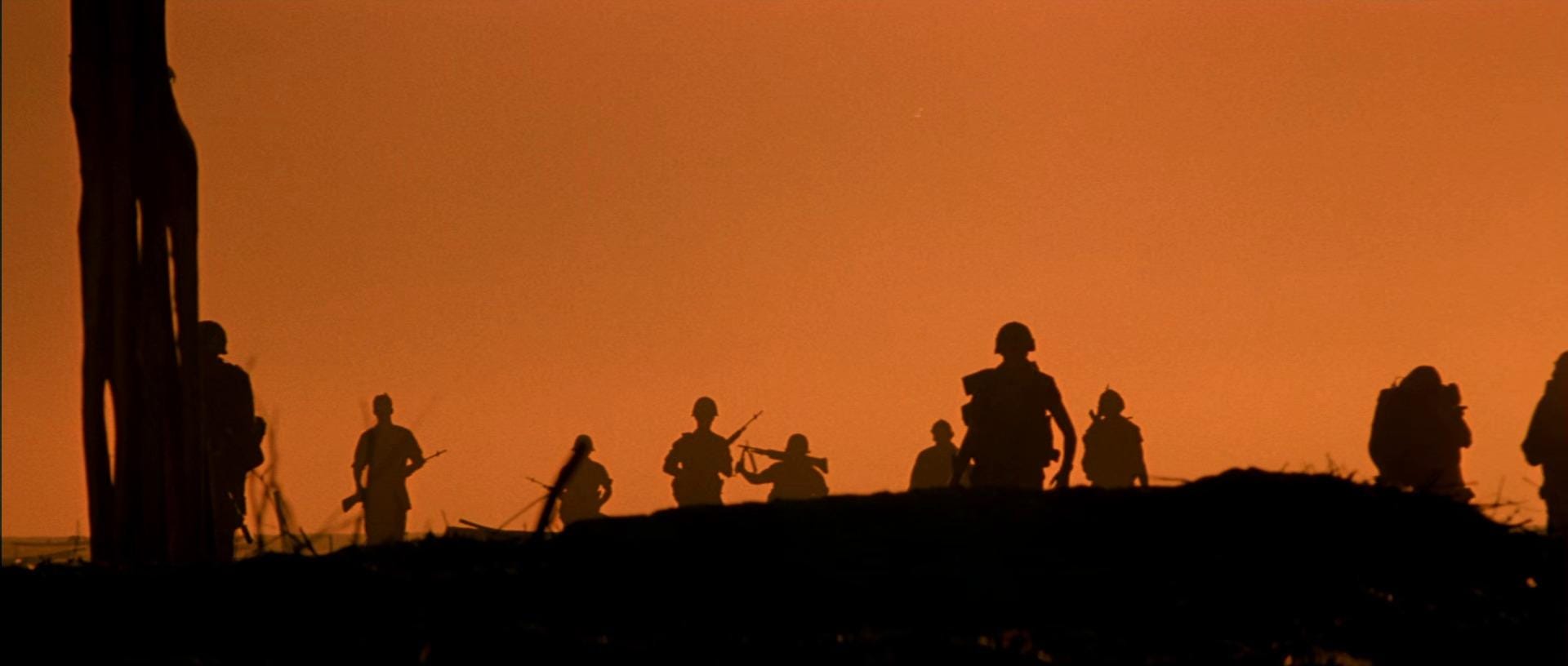
Welcome to March streaming, accessible, as always, here.
On February 28, the first day of “Operation Epic Fury,” a U.S. tomahawk cruise missile struck Shajarah Tayyebeh girls’ elementary school in Minab, Iran, killing 175 people inside of it—168 of whom were children, ages 7-12. The missile was one of several launched within the first hours of the U.S.-Israeli attacks on Iran, which have killed and injured thousands; created black, toxic rainfall in Tehran; and enmeshed the region in yet another war in the alleged name of “regime change.” Here at home, life continues quite normally, even as the Trump administration dangles the possibility of a draft to accommodate ground troops in Iran: we are here, and war is something that happens over there.
When Luke and I first pitched a collaboration on “war movies”—years ago, at this point—we had no way of knowing that scheduling it for March would have such unfortunate relevance to our present moment, accidentally timed to coincide with the Trump administration’s war-mongering operations in Iran (originally, we thought it would only coincide with our actions in Venezuela). It’s quite a thing to write up 160 war movies—many of them outright propaganda—then sit and reckon in real time with the slaughter of innocents done in your name, with money from your taxes. In compiling a list of noteworthy war movies, the very first trend you notice is just how many films considered to be exemplary of the genre deal with the harsh realities of coming-of-age amidst war zones. As Americans, we’re comparatively ignorant of such realities, but foreign films like Forbidden Games (1952), The Bridge (1959), Ivan’s Childhood (1962), Come and See (1985), Hope and Glory (1987), Grave of the Fireflies (1988), Red Cherry (1995), Innocent Voices (2004), and Blitz (2024) examine how war forever shapes the children who come of age under it: war is a pressure cooker that permanently, irreparably alters the mind, body, and soul. Most of these films draw inspiration from individuals whose childhoods were directly impacted and shaped by living in war zones, and the traumas that lingered far after the initial strikes. When I think of those poor girls, I’m struck by how we cannot appreciate the gravity of such transformative violence from so very far away, shielded from the physical reality of such atrocities. For my generation, raised in the shadow of the Gulf Wars, war is so very far away; so abstract; so relegated to the movies. These are the movies that taught us what war is, in the absence of a draft to show us firsthand.
Also this month: an ode to “the Con Job”; two of the biggest icons of East Asian cinema, who specialize in kicking ass and looking good while doing it; and the return of our Oscar-adjacent retrospective on 100+ years of film. Watch your flank:
“My Film is Not About Vietnam, It is Vietnam”: The War Movie
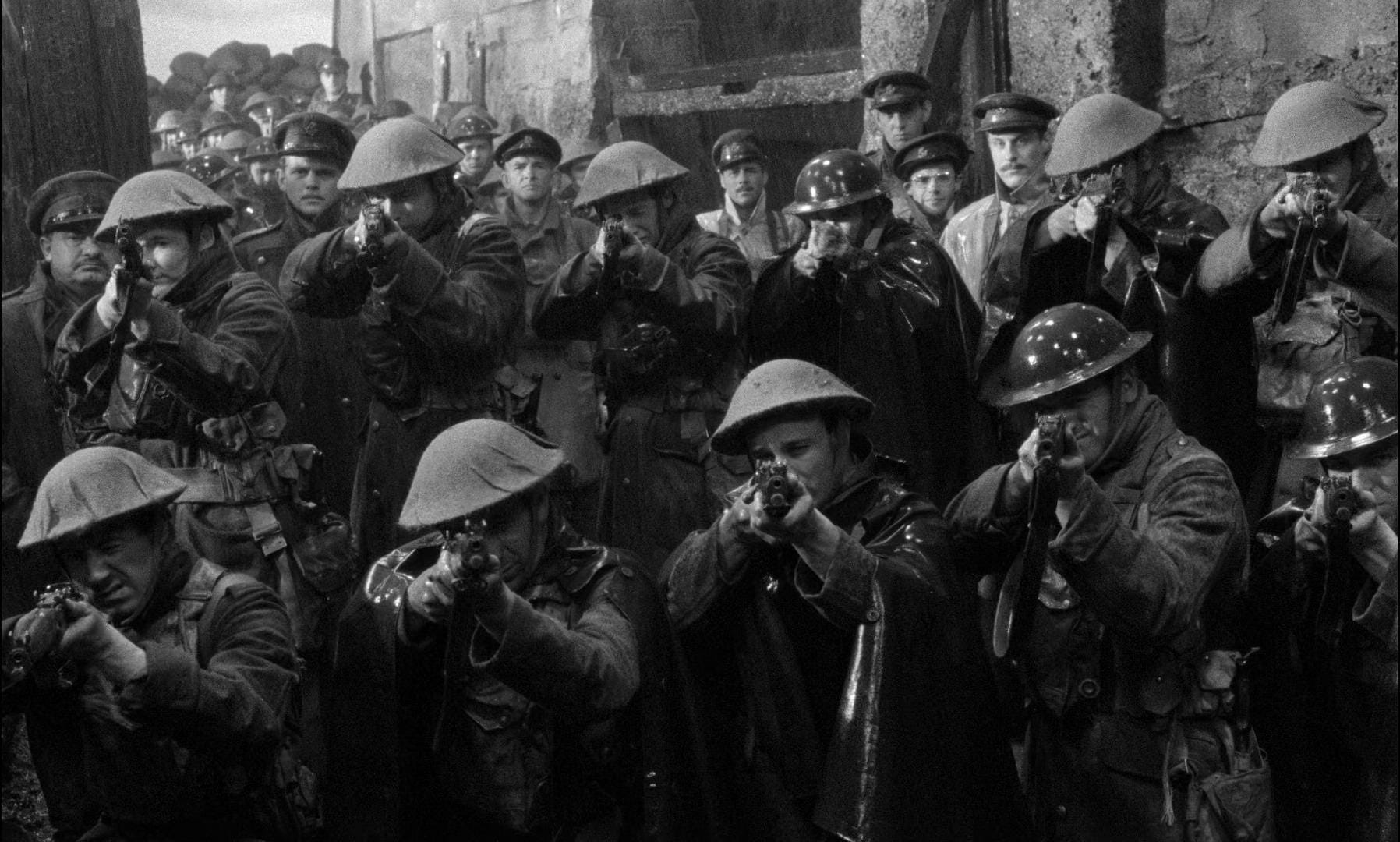
“Tell me the story of the foot soldier and I will tell you the story of all wars,” reads the opening card of Anthony Mann’s Men in War (1957), a Korean war film so unsentimental and so critical of the class structures that uphold military culture that it earned the ire of the U.S. Army, who pulled their support sometime prior to the film’s release.
Tell me how war is depicted in a war movie, and I’ll tell you whether it gets made for scraps or billions. That’s because “war movies” get made with the cooperation of national militaries, who provide the costly equipment and access to military bases for filming, in exchange for military-friendly messaging. It’s no secret: in the United States, the Department of Defense War Community Engagement Office fields production assistance requests. You can read this pithy blog post from the [former] Department of Defense outlining exactly how that works, as well as the longstanding history of collaboration between filmmakers and the military: “Production agreements require the DoD to be able to review a rough cut of a film, so officials can decide if there are areas that need to be addressed before a film is released.” It’s quid pro quo, and if the military doesn’t like how your movie makes its personnel look (telling stories of, say, extra-judicial violence / war crimes committed by servicemen), it can yank or refuse support—as they did on production of Robert Aldrich’s World War II drama Attack (1956), forcing the filmmaker to purchase his own tank to complete the picture. Military participation in Hollywood dates all the way back to the first Academy Awards, the above DoD article tells us, before offering up this fascinating chestnut: “Ever hear of the silent film ‘Wings’? Yeah…me either [sic].”
You’re not going to believe this, but I have heard of the silent film Wings (1927). This program begins with Wings (1927)—William A. Wellman’s groundbreaking World War I picture lionized for its innovative use of aerial dogfighting sequences, filmed at Kelly Field in San Antonio with many real-life pilots—which won the first-ever Academy Award for Best Picture. It goes all the way up through last year’s Warfare (2025)—marketed as being based on co-writer/director Ray Mendoza’s own experiences as a U.S. Navy SEAL during the Iraq War—and features (fiction) films from all over the world, with some filters applied. For the sake of (relative) brevity and thematic coherence, all of the films in this program depict wars from the 20th century and beyond: wars (and war mythologies) shaped by the parallel development of film technologies. We further tried to focus on films that deal with boots-on-the-ground fighting, with the understanding that espionage thrillers and holocaust films are distinct genres.
Really, this program begins in 1930, when a handful of pioneering films took advantage of new synchronized sound technologies to construct the blueprint for the modern war film: from Hollywood, Howard Hughes’ Hell’s Angels (1930), which featured aerial dogfighting sequences so dangerous, more than one stuntman died shooting them; Howard Hawks’ (very romantic) buddy flick Dawn Patrol (1930), inspired by the director’s own aviation experiences training pilots in World War I; and the Best Picture-winning All Quiet on the Western Front (1930), an antiwar film that took pains to realistically depict war as a zero-sum game fought by idealistic young men trapped in horrific conditions. And from Weimar Germany, G. W. Pabst’s first “talkie”: the proto-neorealist, formally sophisticated Westfront 1918 (1930), later banned by the Nazis, which tried to soberly convey the dehumanizing nature of war as a form of pacifist critique. Sound is vital to conveying the reality of war as a full sensory experience, and proved a pivotal point in the refinement of the war film as a document of real, lived experiences. With these films and beyond, we can begin to ask: how does the moving image shape our understanding of the wars that shaped our historical present?
War, except to those who fought or experienced it, remains an abstract (or partially abstract) concept: the duty of the war film is to reconstruct armed conflict, as a means of folk storytelling or the advancement of propaganda, so as to give a people the feeling that they have experienced it. Film is still the ideal medium to achieve this mimesis. Think about the pop iconography we most associate with each war of the 20th century: the sunken trench warfare of World War I, memorably captured in the gut-wrenching tracking shots of Stanley Kubrick’s Paths of Glory (1957); the claustrophobic submarines, like those in Wolfgang Petersen’s Das Boot (1981), and chaotic beachfronts of Normandy, in films like The Longest Day (1962) and Steven Spielberg’s Saving Private Ryan (1998), when we think of World War II; the low-flying helicopters, nameless villagers, and dense jungle terrains of the Vietnam War, established in Francis Ford Coppola’s Apocalypse Now (1979) and Oliver Stone’s Platoon (1986); the total obfuscation of troop warfare in the Gulf War era, exemplified by the visually disorienting (and intellectually dishonest) Black Hawk Down (2001), from Ridley Scott. Then there’s the fact that 21st century war movies about 21st century wars are basically irrelevant: it’s an age of automation, where massacres are carried out by buttons and machines to the indifference of the general public. Is the (contemporary) war movie dead? Warfare (2025) made money, but it received serious criticism for propping up the underlying narratives of the United States’ military, and I can’t say it had any cultural impact. In our more discerning present, it seems like war movies have become something of a niche interest, consumed by those with a fetish for it. I wouldn’t say I’m one of those people, but I am fascinated by war movies.
To help with such a staggering cinematic survey, I’ve tag-teamed my good friend Luke Bowe, a professor at Kenyon College who previously contributed Spanish film recommendations for our May Day-themed programming way back in 2022. He joins me again for a theme that might seem unusual coming from two ostensible progressives. But between the two of us, we’ve seen a lot of war movies, and we have things to say about them! Luke’s commentary is tagged accordingly in the spreadsheet, and here’s what he had to say about the films featured in this program:
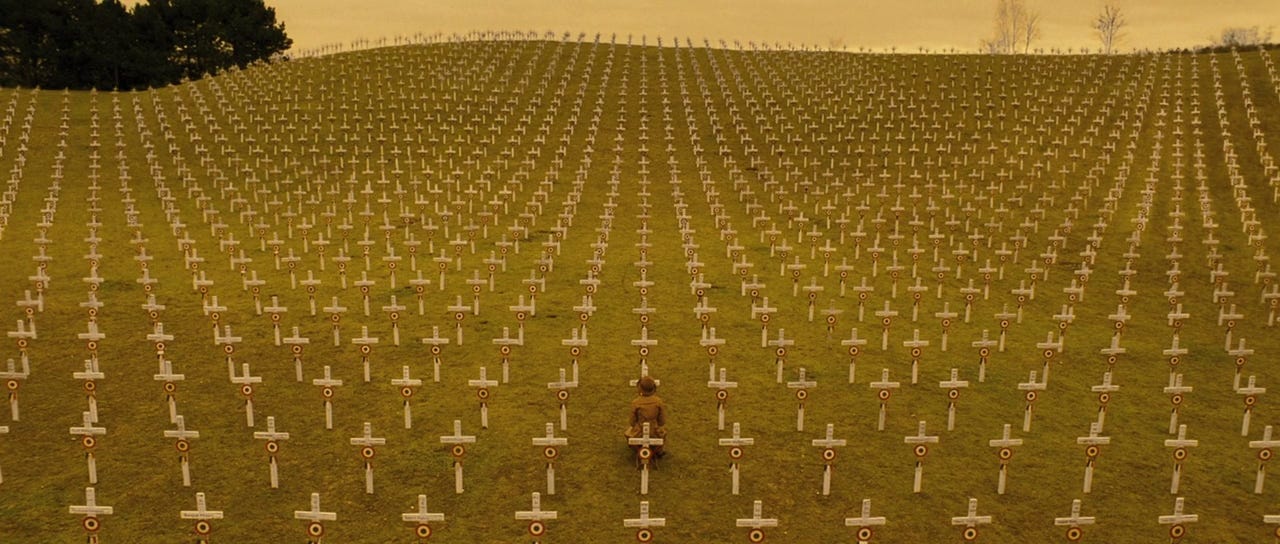
Broadly speaking, cultural texts are the stories we tell about ourselves. Beyond existing as works of art, literature, music, or cinema, they are artifacts that reveal the triumphs, failures, preoccupations, and predicaments experienced by a specific group of people at a specific moment. They are not only the stories we want to remember, but also those by which we wish to be remembered. War movies exemplify this tendency. They project and enforce visions of nation. They celebrate victories and mourn defeats, immortalizing heroes as they villainize the enemy. Their messages can run the gamut from flimsy jingoism to devastating critiques of war itself. Be it an Oscar-winning masterpiece or a B-film flop, a war movie can reveal much about a conflict, the men and women who fight in it, and those who order them to do so.
War movies are something of a guilty pleasure of mine. From acritically watching whatever loud, explosive movie was on TV at the time as a child, through analyzing them in college film courses, to subjecting myself to some truly horrendous, schlocky Franco-era Spanish films in my graduate studies, I’ve seen more than my fair share of them over the years. As the years go by, though, I find myself increasingly uneasy with the genre. As our screens are increasingly filled with distressing images of ICE agents decked out in the latest tactical gear, cosplaying as special forces starring in their own Zero Dark Thirty missions in Anytown, USA, I cannot help but see the steady banalization of state-sanctioned, militarized violence in the cultural products we consume and glorify. I see the same trends in the supermarket shelves filled with Black Rifle Coffees, the unlockable weapons and skins in videogames such as Call of Duty, or the roar of military jets before major sporting events. The same sound that would terrorize civilians caught in a combat zone is greeted with hoots and hollers of entertainment. As the USA prepares to celebrate 250 years of independence, such displays of military might are only increasing.
The movies on this list, comprising hundreds of hours of such stories on celluloid, from different countries, and in different languages, are testament to the enduring impact and commercial viability of war films. And as hard as many are to watch—some are disturbing, others simply terrible—they are a reminder that instead of looking away, sometimes we simply must look closer. Just what are the stories we are told we ought to tell about ourselves?
The Big Con: Movies About Scams, Schemes, Lies, and Tricks
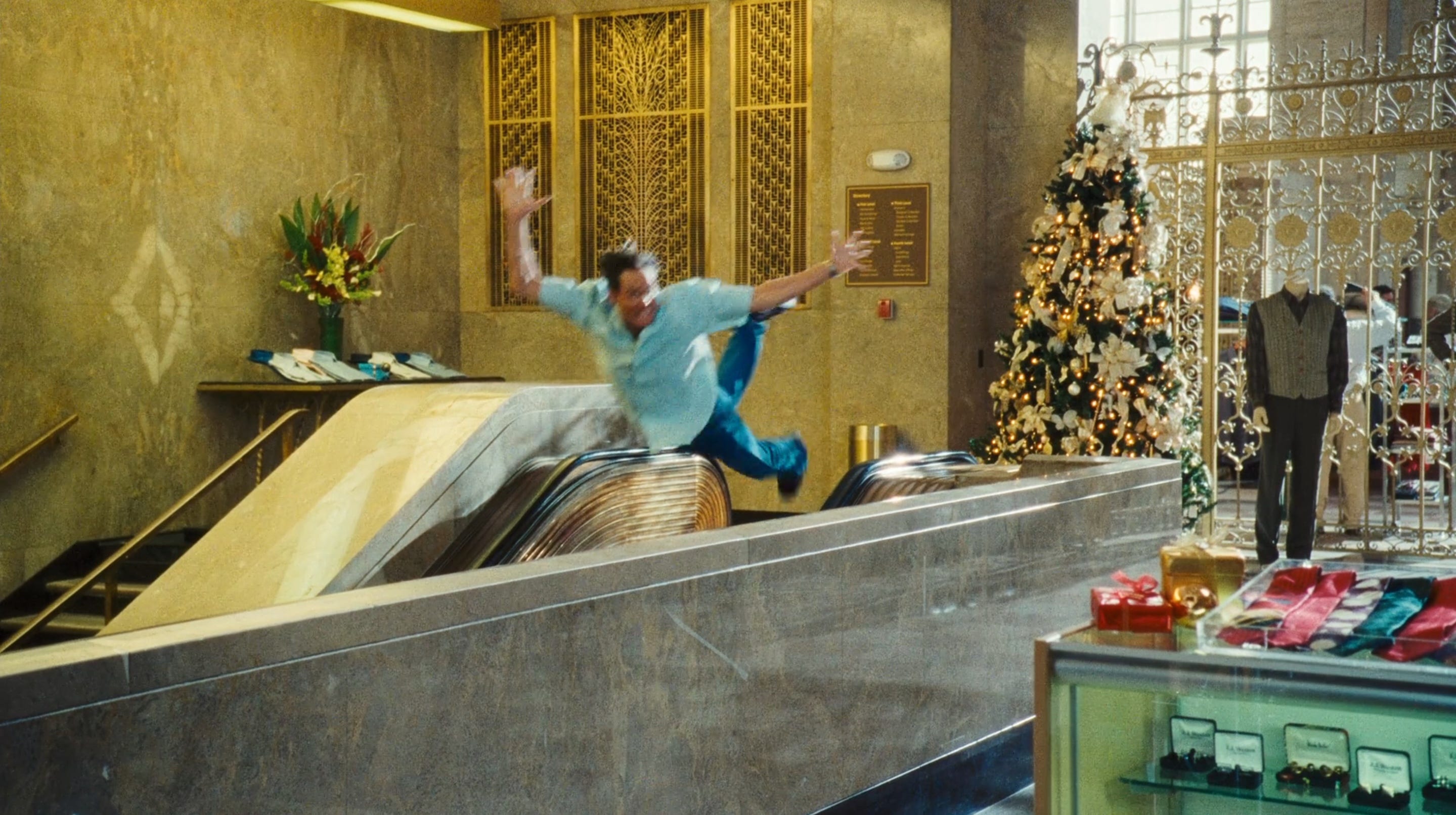
“Ladies and gentlemen, by way of introduction, this is a film about trickery and fraud; about lies,” Orson Welles, master of deceit, narrates at the top of F for Fake (1974), his cheeky docudrama about the parallel stories of art forger Elmyr de Hory and Clifford Irving (the novelist who tried to sell a fake Howard Hughes autobiography after writing a book about Elmyr de Hory’s exploits). “Tell it by the fireside or in a marketplace or in a movie. Almost any story is almost certainly some kind of lie.”
This program is similarly about trickery and fraud; about lies. About fraudsters, scammers, snake oil salesmen, forgers, flim-flam men, thieves, false prophets, fakers, con artists, counterfeiters, prestidigitators, hucksters, liars, ambulance chasers, shady drifters, and total grifters. It’s maybe one of my favorite collections we’ve ever done? “Confidence men” form the basis for (and bring so much flavor to) so many of my personal favorite films, and there’s always something a little titillating about watching the wicked work their schemes, particularly if they’re pushed to a point of desperation, stacking lie upon lie to try and keep their head above water.
We’re truly in the age of the scam and the age of the fake, when the distinction between what’s real and what’s phony is being blurred at the highest levels of government, technology, media, and entertainment (to wit: some of the most-liked images online this year are AI slop photos of Zendaya and Tom Holland’s definitely real wedding by a Spanish “digital creator” on Instagram). It feels like every day we see more evidence that the scammers are winning out over the straight-and-narrow, with artificial intelligence eradicating whatever flimsy boundaries were in place to protect us from these shysters. Just in 2024, the year of Luigi Mangione, three (very different, but all low-key good) films actually depicted vigilante violence enacted against the abhorred scammer: David Ayer’s The Beekeeper (2024), in which Jason Statham targets call centers targeting the elderly; Josh Margolin’s (deeply underrated) Thelma (2024), which stars June Squibb as an elderly woman on the hunt for the scammer who conned her out of $10k via a faked emergency call; and Kiyoshi Kurosawa’s Cloud (2024), in which an online forum unites in real life to attack an online reseller of cheap goods (Masaki Suda). There’s a clear takeaway here: as structural violence is continually enacted against the vulnerable to the indifference of those in charge, the mind can’t help but fantasize about interpersonal violence, a reflection of our feeling of hopelessness. In a world built on bullshit, is anyone in charge going to even try and save us from all these fakes?
One thing about the con job is that there’s nothing new about it: schemers have been running games on the gullible since Zeus disguised himself as an elegant bull to abduct Europa (or you know, whenever). One thing that struck me while reading Bridget Read’s recent Little Bosses Everywhere: How the Pyramid Scheme Shaped America—a history of “direct selling” / multi-level marketing’s foothold in American culture, business, and politics—was the notion of there being a sort of folk history of direct sales scamming, akin to the hobo code, known only to those who have studied the blade and passed down the confidence skills to subsequent generations. Each Ponzi schemer and multi-level-marketer came out of a previous system of exploitation: they get ripped off, then they rip off others, they teach others how to rip off, on and on ad infinitum (and now we’re living with the consequences). These movies, in conversation with each other, also represent a kind of pop history of scams. It’s a Barnum and Bailey world, just as phony as it can be, so get into it!
Tony the Tiger: Tony Leung (Chiu-wai), Screen Icon
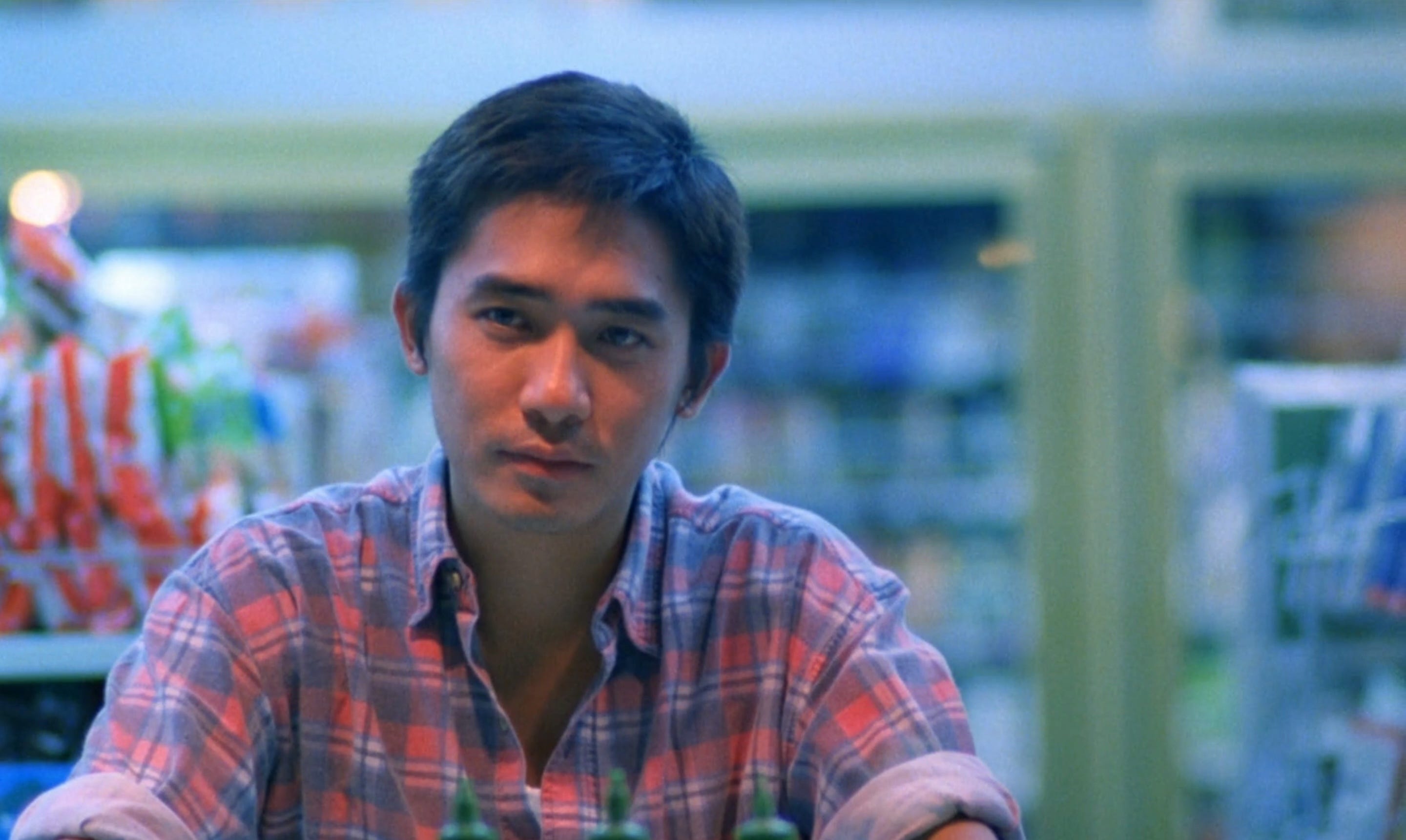
There have been handsome men featured on The Spread—you might notice that we’re somewhat predisposed towards handsome men around these parts—but few inspire true ardor like Tony Leung Chiu-wai (not to be confused with the other Tony Leung, Tony Leung Ka-fai, aka “Little Tony” and “Big Tony,” respectively), an actor so celebrated that he remains the only man to have won the “Grand Slam” of Chinese-language film awards: the Golden Horse Award (honoring the cinema of Taiwan), the Hong Kong Film Awards (self-explanatory), and the Golden Rooster Awards (honoring the film of Mainland China). Tony Leung is a terrific actor, but far more importantly, he’s my main man. And like any true love story, I remember the first time I saw his face: walking into a storefront (and into a staggering close-up) to the strains of “California Dreamin’” in the second half of Chungking Express (1994), first consumed in my film theory class. I don’t remember what theory we were studying (probably idk postmodernism), but I remember becoming instantly, tragically hyper-fixated on the grooves of that man’s face.
Chungking Express was the actor’s first major collaboration with (controversial) Hong Kong auteur Wong Kar-wai after their brief flirtation on Days of Being Wild (1990), the filmmaker’s sophomore feature and creative breakthrough, which introduced Tony Leung as a nameless character in the final moments of the film (a character that would star in Wong’s later films). But Chungking Express represented the brash young director at his most dextrous: it’s a dizzying, high-speed dash through a melting pot vision of Hong Kong where lives intersect and forever separate in an instant. Tony Leung plays a cop (sorry!!) involved in a relationship with a, well, flighty flight attendant: in her (frequent) absence, he lounges around his dirty apartment in his underwater, offering reassurance to inanimate objects instead of himself to soothe the frayed edges of his own broken heart. During the day, he loiters around a food stand, where a female employee (Cantopop icon Faye Wong, in her most manic pixie mode) routinely catches his eye, though the pair can’t seem to express their (obvious) mutual attraction in any kind of direct way. It’s incredibly frustrating, in the best way. Tony Leung is so dreamy in this picture, it’s a little hard to do justice to his incredible charms, and the uncanny way he’s able to telegraph true yearning, beyond quick comparison: think Jimmy Stewart, or young Leonardo DiCaprio. True screen yearners, who make us, in turn, yearn back. And one should never underestimate the power of a swooning female filmgoer: our love makes movie history!
From a certain perspective, Chungking Express announced Tony Leung’s arrival on the international stage after years of work in Chinese-language television and film: championed by Quentin Tarantino overseas, who released it through his now-defunct Rolling Thunder Pictures label (then under Miramax), the film attracted a cult international fanbase, and has gone on to become institutionally recognized as a signature work of 90s arthouse filmmaking. It was the first second of seven films Tony Leung made with the infamously difficult writer/director,1 all of which (more-or-less) received acclaim by international critics, though they were less-appreciated at home in Hong Kong. But for all their lore as a paired set, Tony Leung wasn’t remotely discovered by Wong Kar-wai; actually, Tony Leung made 34 movies and 27 television shows before he starred in a WKW joint, a stark reflection of just how relentless the treadmill of the Hong Kong entertainment industry was at the end of the 20th century.
Tony Leung came to prominence as one of the “Five Tigers” of TVB (Television Broadcasts Limited, Hong Kong’s main commercial television network): five male graduates (including future stars Tony Leung and Andy Lau) of the network’s in-house “Artiste Training Academy” who proved to be particularly popular rising young stars and were simultaneously promoted, appearing in a few television series (and one theatrical film) together. (Here they are being forced to do circus acts on television). One of those programs, Police Cadet ‘84 (1984), romantically paired Tony Leung’s character with that of another TVB rising star, Maggie Cheung, who would go on to become the leading man’s co-star on a number of iconic pictures together (in 2005, Tony Leung referred to her as his “alter ego,” which is certainly quite the handle). Both performers were a part of a stable of recognizable actors who’d appear in Hong Kong films at a time when the industry became a major cultural and artistic powerhouse, the so-called Golden Age of Hong Kong Cinema, when Hong Kong became the third-largest producer of film globally (behind Hollywood and Bollywood). Consequently they loom quite large in our understanding of and appreciation for Hong Kong film at its absolute best.
But Tony Leung’s first real theatrical role of note came courtesy of Taiwan. City of Sadness (1989), Hou Hsiao-Hsien’s Golden Lion-winning familial drama set in postwar Taiwan, was the first film from Taiwan to address the “White Terror,” the repression of Taiwanese civilians and political dissidents and installation of martial law by the Kuomintang after the Chinese Civil War. Its success on the international stage actually helped draw attention to the country’s emerging film scene, dubbed the New Taiwan Cinema. Tony Leung plays the deaf youngest son of a gambling dynasty who finds himself in the middle of the scourge when he tries to do the right thing by his left-wing friends; unable to hear or speak (as the various languages spoken in the region are all tonal), he communicates his character’s interior turmoil solely through his facial expressions—a skill that would go on to become his secret weapon as a performer. Tony Leung reunited with Hou Hsiao-Hsien a decade later for the equally-acclaimed, sumptuous period piece Flowers of Shanghai (1998), in which he plays a reserved wealthy patron in a fraught relationship with a “flower girl” courtesan at a 19th-century Shanghai brothel. With his hairline shaved back in the historical queue style, he has even more of a palette to work with, telegraphing a rich internal world trapped inside a reticent man. In scenes crowded with performers, your eye is always almost drawn to him, and the distinct way he carries himself. When his character finally breaks his composure in a moment of fury, it’s all the more powerful for how violently it deviates from that sense of total control.
More-or-less a Method actor, Tony Leung channels his personal pain into his characters, sometimes blurring the line between reality and performance. His father, a gambler, abandoned the family when he was just seven-years old, a source of lasting shame that left him reticent and quiet. “I’m so afraid to talk to my classmates, afraid that if someone says something about family I won’t know what to do,” he told the New York Times in 2005, describing how it caused him to turn inwards. “So I became very isolated. So that’s why I love acting, because I can express all my feelings the way I couldn’t for so long.” That sensitivity and neuroticism carries into his best dramatic performances, as if his characters are constantly struggling to speak their minds, but fear the vulnerability that follows. That sense of restraint, and unwavering physical control, really makes him such a terrifically compelling (and very subtle) screen actor.
Despite this early critical success, Tony Leung’s transition out of television work was bumpy: his first great Hong Kong feature, John Woo’s future-classic Vietnam War picture, Bullet in the Head (1990), which is featured prominently in our War Movie program this month, was a massive, expensive flop in Hong Kong—even though Tony Leung, a reliably understated foil to John Woo’s over-the-top style, is so great in it. He plays one of three childhood best friends who travel to Saigon to try and take advantage of the turmoil by selling bootlegged goods, only to become ensnared in the maw of the ongoing war—he’s burdened with a conscience, which makes his disillusionment at the stark reality of warfare just heartbreaking. Bullet in the Head has been reassessed in recent years, particularly as Woo’s cult has risen, and the pair’s next collaboration, “heroic bloodshed” classic Hard Boiled (1992), the filmmaker’s final Hong Kong film before moving to Hollywood, would be better-appreciated in its own time. A massive success on release, it helped cement Chow Yun-fat as a generational star, a necessary recalibration after the commercial failure of their previous joint effort, The Killer (1989)—also a stone cold classic. In Hard Boiled, Chow Yun-fat plays a detective who teams up with undercover cop (Tony Leung) to take down a group of gun smugglers in the coolest ways possible—including an iconic hospital shootout sequence, rendered in one long, continuous take that represents the artistic highs of the action genre (a feat of marking and camera choreography that also required its leading men to act mid-way through). A propulsive, ferocious orgy of poetic violence and stylistic excess, Hard Boiled is the action film every other action film imitates: a manifestation of Woo’s tremendous ability to marry rich thematic storytelling with thrilling ultraviolence. And in Hong Kong cinema, actors performed their own action choreography, meaning Tony Leung did all that himself (he was even hospitalized during the filming of the hospital sequence, which sent glass shards into his eye).
The year after Hard Boiled, Tony Leung was in nine films, a mix of wuxia, fantasy, and comedy films—including the (secretly really fun) mo lei tau (“nonsense”) slapstick comedy The Eagle Shooting Heroes (1993), released over Lunar New Year as a way to make a quick buck while production was delayed on Wong Kar-wai’s Ashes of Time (1994), a serious rendering of the same material that would come out a few months after Chungking Express. It’s funny to think of The Eagle Shooting Heroes and Ashes of Time in conversation with one another, because they could not be more different in tone, style, or creative aspirations. Tony Leung is the lead in The Eagle Shooting Heroes, embodying the part played by Leslie Cheung in Ashes of Time, and he’s hysterical (going way broader than he typically does, while still “no selling” the biggest visual gags). In Ashes of Time, he plays more of an ancillary role as a besotted blind swordsman, and while the film has its fans, it’s regarded as one of the weaker Wong Kar-wai joints.2
But his next picture with Wong Kar-wai, Happy Together (1997), is an undisputed classic: a sensitive depiction of queer romance in the form of an unlucky-in-love gay couple from Hong Kong who travel to Argentina, break up, and lack the funds to return home. Co-starring alongside his real-life friend and frequent co-star Leslie Cheung (a queer icon), Tony Leung is just heartbreaking as a scorned, resentful lover unable to physically or emotionally move on from a bad boyfriend, even as his love tears him apart. In one particularly memorable scene, he’s given a tape recorder to record a message expressing his true feelings; we never hear what he says, but Tony Leung telegraphs whatever it is through sheer physicality, pouring all the things that can’t be said into this moment. It’s such a raw, vulnerable performance that it almost causes physical pain (and given the years of stories about WKW’s poor treatment of actors, probably was the result of some shenanigans). The breakdown of the couple’s relationship onscreen is a reflection of the offscreen uncertainties for queer couples in Hong Kong under shifting cultural and legal standards: Happy Together was released the same year as the handover of British-ruled Hong Kong to mainland China (incidentally, it was also the same year that mainland China overturned the country’s ban on gay sex, openly depicted in the film) and remains one of the far-too few Chinese-language films to openly portray queer sexuality in a non-stereotypical fashion. A visual and (emotional) triumph that brought Tony Leung his second Hong Kong Film Award for Best Actor (after Chungking Express) and won its filmmaker the Best Director at Cannes, Happy Together proved a point: that the seismic rise of Wong Kar-wai as a major auteur of Chinese-language cinema was inextricably linked to his true muse, Tony Leung. Their next film would play out like a coronation.
In the Mood for Love (2000), devastating from the very first plucks of “Yumeji’s Theme,” was another life-changing flick I watched in film school, this time for a class on “retro cinema,” or: media that plays with (and subverts) a nostalgic aesthetic, coinciding with the then-popularity of Mad Men. And like a Shanghainese Don Draper, Tony Leung traipses through this period melodrama, set in British-occupied Hong Kong in 1962, in sharp tailored suits and slicked-back hair, his perfectly constructed exterior a mask for the profound unhappiness and suffering that plagues him. In a role that won him Best Actor at the Cannes Film Festival (the first and to-date only performer from Hong Kong to earn such a distinction), he plays a married journalist living in a claustrophobic, dilapidated multi-family dwelling in an isolating urban landscape governed by strict codes of morality. Regularly left alone by his offscreen working wife, he frequently bumps into his beautiful neighbor (Maggie Cheung), whose husband also happens to frequently be “away on business.” As they confront their mutual heartbreak over their spouses’ shared infidelity, playacting scenes of seduction to discover the truth of the situation, they uncover something far more destabilizing: their attraction towards one another. The pair’s unconsummated love affair, sad and painfully beautiful, feels inevitable, though nonetheless bittersweet—it helps that the pair have smoldering chemistry, to the point that it fueled rumors of a clandestine offscreen affair, despite Tony Leung’s longtime relationship with co-star-turned-girlfriend-turned-wife, Carina Lau (whose super-chic Instagram remains a vital resource); gossip stalwart Lainey Gossip once dubbed it the Chinese Brangelina (though it remains pure speculation). In the Mood for Love was beloved in its time and has remained so over the years, a true work of superior craftsmanship regularly shortlisted as one of the greatest films of all time and a signature work of Hong Kong arthouse filmmaking. But the real secret to its success is Tony Leung’s incredibly subtle lead performance, apparently based on his phantom father, as a man experiencing emotions he’s forbidden from outright expressing. Whole revelations pass across his face, fleeting and multi-layered in their meaning, as he comes to terms with emotionally becoming the thing he’s hated the most: a cheater. “You notice things if you pay attention,” a character remarks at one point in the film; it could be the tagline for this movie, which is as much about an interpersonal relationship as it is about the inability to turn back time, and the process of making peace with a bygone world.
Viewers got a chance to see the doomed, star-crossed lovers of In the Mood for Love actually consummate their love (in yet another doomed, star-crossed love story) with the forever-underrated Hero (2002), Zhang Yimou’s groundbreaking aughts wuxia classic, also shot by WKW go-to Christopher Doyle, which captures one epic story from several different perspectives across five distinct visual sections defined by a single color: black, red, blue, white, and green. As one of two lovers who travel across worlds and color schemes to fight each other, Tony Leung is badass and heartbreaking at different turns, lending serious sex appeal to a stacked cast of some of Chinese-language film’s biggest stars. The film was successful enough to crossover stateside (because my friends rented it from Blockbuster the night I got my first kiss, which made far less of an impact than Hero), reflecting a moment of cross-cultural conversation between east and west (consider the popularity of Ang Lee’s Crouching Tiger Hidden Dragon in 2000, and Zhang Yimou’s House of Flying Dragons in 2004). Tony Leung was absolutely integral to that conversation, quickly scaling the ranks of the greatest actors of all-time and bringing greater visibility to (and institutional recognition of) Chinese-language performers on the global stage—unlike many of his cohorts, he never crossed over into English-language film, until, incredibly, the Marvel movie Shang-Chi and the Legend of the Ten Rings in 2021 (where he easily dwarfs the dopey leading man at the center of the picture).
He’d appear just one more time with Maggie Cheung, in a not-quite-sequel to In the Mood for Love, Wong Kar-wai’s less-beloved (but low-key ahead-of-its-time) cult science fiction arthouse flick, 2046 (2000), which subverts the very notion of a “sequel” film. The film is set on a futuristic train in 2046, the year that formally ends the “one country, two systems” arrangement that has governed the autonomous Hong Kong since its handover by the U.K. to mainland China in 1997. Every passenger on this train attempts to reach the train car named 2046, where nothing ever changes, so there is no loss or sadness; but no one ever comes back from 2046, so no one knows what’s really there. Tony Leung’s character from In the Mood for Love, now a playboy chasing empty sex to stave off heartbreak, (metaphorically) boards this train, which is actually the conceit of a science fiction novel he’s writing, in a desperate hope to find his long lost love Su Li-zhen (Maggie Cheung, who appears briefly, as a sort of cinematic phantom); his own attempt to go back. Instead, he meets (and romances) several women in his real life, including another Su Li-zhen (a fabulous Gong Li), a woman in a doomed relationship played by Faye Wong (Tony Leung’s co-star on Chungking Express), and Carina Lau’s showgirl character from Days of Being Wild; they all also appear aboard the train as cyborgs in the story he’s writing. Tony Leung, in yet another Hong Kong Film Award-winning performance, plays a new iteration of his former character: cocky and irreverent in a way that masks a fundamental rupture. He’s beguiling, but totally pathetic: a void destroyed by the loss of true love.
There’s one more Tony Leung performance we need to talk about, which is, in my estimation, his personal best: his Golden Horse-winning turn as a terrifying special agent / recruiter for the Japanese puppet state in occupied China—who is romantically pursued by a Chinese student-activist-turned-spy (Tang Wei) as part of an assassination plot—in Lust, Caution (2007), Ang Lee’s criminally underrated erotic espionage thriller set against the backdrop of the Second Sino-Japanese War. Controversial on release in China for its explicit sexual content (Tang Wei was banned from acting for two years by the State Administration of Radio Film and Television because of it), the drama surrounding the film eclipsed the fact that it’s a modern, thorny masterpiece about the conflict between the personal and political, the blurring of love and desire, and the way war transforms individual and collective priorities. The sex scenes, which reportedly took 100 hours to shoot, are certainly explicit, but act as critical storytelling devices vital to the film’s tone and overall themes of psychosexual obsession. Tony Leung’s outwardly suave (married) official is a cruel and sadistic man, and the continued seduction of this figure proves incredibly taxing on our heroine. She becomes entangled in a dark, multi-layered sadomasochistic relationship balanced on the edge of a knife. The film knowingly exploits Tony Leung’s charged charisma, and the actor plays his unlikeable character with such understated nuance that it becomes clear we can never truly know this man, nor the contents of his twisted heart—in one wordless sex scene, a cut to a close-up of his face, wrecked with emotion, communicates a depth of feeling that is never outright voiced.
There are way more pictures of note, all compiled in this program: Johnnie To’s terrific The Longest Nite (1998); Wong Kar-wai’s The Grandmaster, which stars Tony Leung as the legendary Ip Man, forcing the actor to learn the Wing Chun form of kung-fu for the role; John Woo’s epic, two-part Han Dynasty war film Red Cliff (2008-2009); Trần Anh Hùng’s Vietnamese film Cyclo (1995), in which he spirals out to “Creep” by Radiohead; Jeffrey Lau’s gender-bending, Huangmei opera parody Chinese Odyssey 2002 (2002); Stanley Kwan’s 80s melodrama Love unto Waste (1986); and a whole lot more. If you’re familiar with Tony Leung, I promise you there’s a lot more to watch from his incredible career than any of us realize; if you don’t know him, let this serve as the impetus to fall in love too. Next month he’s receiving a career retrospective at Film at Lincoln Center, where he’ll make his first appearance at the institution in 25 years in support of his latest movie (and first European film), Hungarian filmmaker Ildikó Enyedi’s Silent Friend (2025); rest assured I will be seated front fourth row, swooning from a respectful distance.
The Good, the Bad, and the Weird: aka the Movies of Lee Byung-hun
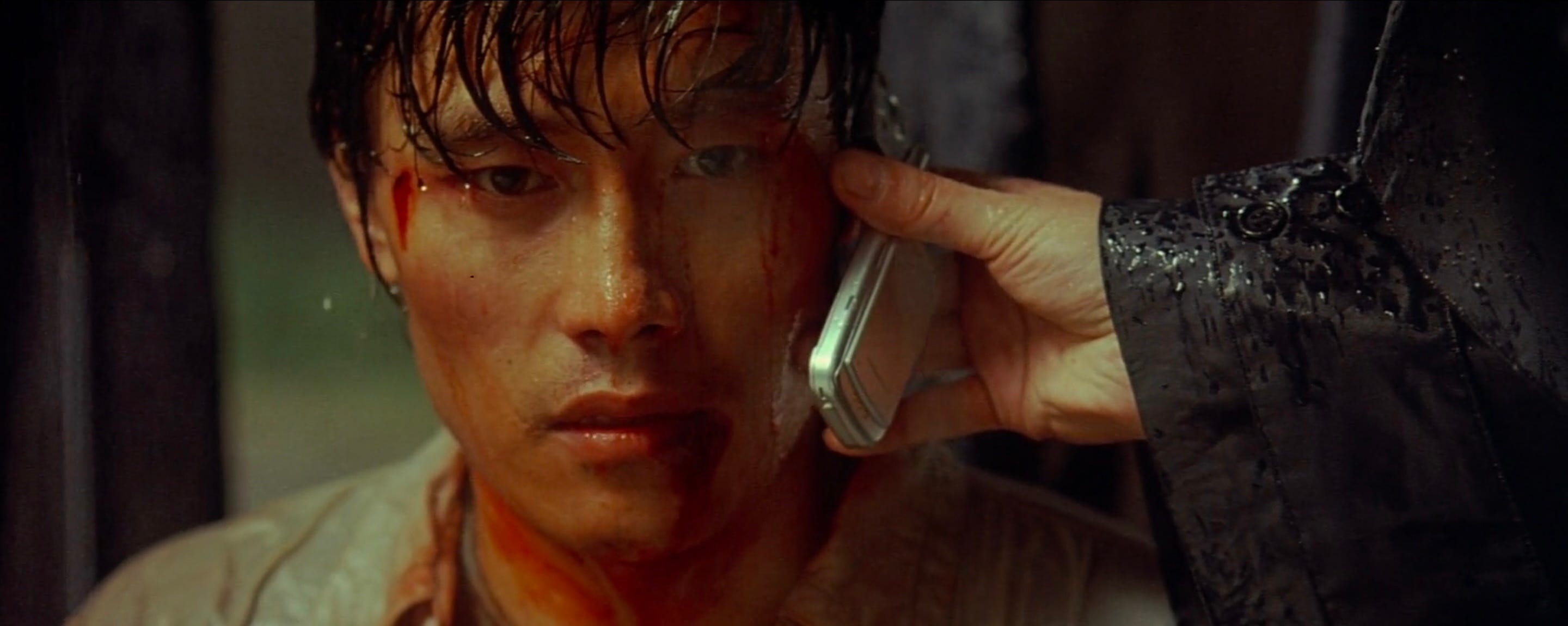
It’s been one long week of suspense leading up to this weekend’s Academy Awards (God, Aren’t We All Ready to Move on Already?), and there has been a ton of chatter about just who will win the hotly-contested Best Actor prize in a tight toss-up of a race (based purely on wild speculation, I’m putting a marker down on a Wagner Moura surprise upset after the collapse of Timothée Chalamet’s Oscar campaign). It’s anyone’s game, really, but we know at least one name that will not be announced: Lee Byung-hun, star of Park Chan-wook’s No Other Choice (2025), this year’s most glaring snub outside of Amanda Seyfried in The Testament of Ann Lee (2025); both omissions, in my mind, invalidate the results (you didn’t lose to the crème de la crème!). Despite early festival hype, No Other Choice failed to scare up a single Academy Award nomination, even though it is objectively superior to half of the films nominated.3 Yes, only one Lee Byung-hun film will be present at this year’s Academy Awards: KPop Demon Hunters (2025), nominated for Best Animated Film and Best Original Song, which stars the talented leading man as a giant demonic mouth. But here at The Spread, we hate to see a great performance by a hunky man taken for granted, and we’re big, big fans of Lee Byung-hun, so why not do what the Academy will not and honor him this month?
Korean film, television, and music have taken over popular culture in a big way the last few decades, and Lee Byung-hun is one of the biggest names in the game: a man so comically handsome, it’s a little unnerving, like a cartoon prince come to life. While he might not quite be a household name stateside, he’s been working in Hollywood genre films since 2009, when he needlessly stripped-down mid-fight as “Storm Shadow” in G.I. Joe: The Rise of Cobra (2009), the highlight of a film with very little else to offer; then got half-naked again for the (more Republican-brained, but better) sequel, G.I. Joe: Retaliation (2013), which he outright steals from “leads” Channing Tatum and Dwayne Johnson, sexless and wooden by comparison. He’s perhaps best known to casual western audiences for his cameo-turned-starring role as “the Front Man” in pop phenomenon Squid Game (2021-2025), the creative Faustian bargain (massive success in exchange for a willful misunderstanding of your work) of writer/creator Hwang Dong-hyuk; the pair previously collaborated on the acclaimed historical drama The Fortress (2017). And really it makes sense, as Squid Game provides the casual viewer a diet version of what Lee Byung-hun has been doing onscreen for decades: kicking ass, and making it look far too easy. As a screen icon, he has rare universal appeal: he’s pretty enough for the “girls” (maybe a little too pretty) and tough enough for the “boys,” making his filmography an eclectic mix of romantic drama and high-octane genre film (some of us like both!). Onscreen, he’s graceful and fluid in motion, but sharp and dangerous, like a cat. “He’s like a ballet dancer: very athletic and elegant and very regal,” Antoine Fuqua, his director on The Magnificent Seven (2016) remake, said of his performing style. “I said, ‘This guy’s like Bruce Lee, man’.”
Like Tony Leung, Lee Byung-hun’s secret weapon as a performer is a palpable sense of self-control: he’s a fine-tuned instrument, poised but deadly, with a kind of tightly reigned-in intensity that makes him so compelling to watch. Also like Tony Leung, Lee Byung-hun began his meteoric career on television, acing a talent audition for Korean network KBS (Korean Broadcasting System) that put him in a series of 90s shows (some of which can be easily tracked down, some of which cannot) that made him into a popular young idol. Film roles trickled in, but he didn’t really click until The Harmonium in My Memory (1999), a coming-of-age period drama set in 1962, in which Lee Byung-hun, earning his first Grand Bell Award (aka the Korean Oscars) nomination for Best Actor, is a young teacher fending off the affections of his 17-year old student. He’s dishy and dopey and sweet in the picture, and it’s the kind of film that brings female fans, but it was his next movie that brought him true acclaim. Joint Security Area (2000), his first collaboration with Park Chan-wook, offered him the kind of rich material that could truly demonstrate the full range of his talent: his dramatic chops and his knack for comedy. I talked about the film at length back during our Korean cinema program: he plays a South Korean soldier who begins a tender friendship with two North Korean soldiers, including one played by fellow Korean film icon Song Kang-ho, while all are stationed at the de-militarized zone that divides the Korean peninsula. It’s a tragic buddy movie with queer undertones (per Word of God), and when I tell you that this movie will genuinely make you believe love can be found at the partition dividing the Korean peninsula, thanks in no small part to Lee Byung-hun’s sensitive, deeply committed performance, I say that without a hint of irony.
The actor collaborated with Park Chan-wook again on horror triptych Three... Extremes (2004), appearing in “Cut,” the second story in the film. Lee Byung-hun spends most of the film tied up, playing a director who is held captive alongside his wife (Kang Hye-jung, of Oldboy) by an embittered extra from one of his movies, who places the pair in a Saw trap, essentially. The pair would not collaborate again until No Other Choice (2025), which I wrote about extensively after its premiere at the New York Film Festival this past fall (clearly, I loved it). To recap, he plays a patriarch who loses his comfortable upper-middle class life when he’s fired from his job at a paper factory, then struggles to differentiate himself as a candidate in a shrinking job market: he’s a paper man in a digital world! To land a new job, he hatches an incredibly short-sighted scheme to eradicate all competition, to unpredictable results. Deliberately over-the-top and sharp as a knife (Park has been fine-tuning anticapitalist storytelling for decades now), the film is really a screwball comedy, with Lee Byung-hun as its pratfalling Cary Grant figure: a ridiculously handsome, put-together man who spends the picture falling over himself and being made to look ridiculous by circumstance. It’s career-best comedic material for the actor, particularly given that he’s turned into something of an “action star” in popular imagination these past years. There’s something very Old School and Chaplin-esque about his performance, mannered and deeply silly, particularly in the film’s delightful dance number. While it may not have been formally recognized by Hollywood’s elite, I think the performance will stand the test of time.
But Lee Byung-hun’s strongest work is with Park’s contemporary, Kim Jee-woon, a South Korean auteur who makes the kind of highly-stylized, darkly comedic movies that people forever associate with Korean cinema. In their acclaimed first collaboration, A Bittersweet Life (2005), which made Lee into a bonafide leading man, Kim revels in the contrast between the actor’s severe beauty and the bloody violence that engulfs him, framing him like some doomed fallen angel, artfully spattered in blood. He plays a loyal, unkillable hitman who stumbles, for the first time ever, from an impossible request: murder the beautiful, philandering girlfriend of his beloved boss, a directive complicated by his own romantic feelings towards the young woman. His refusal, however noble, signs his death warrant, and he spends the film outrunning the noose around his neck, with death in hot pursuit. The film, as beautiful as it is brutal, seems like it would be a derivative dorm poster movie, but it is actually so sobering in its depiction of cascading brutalities. Such propulsive violence motivates their next picture, The Good, the Bad, the Weird (2008), Kim Jee-woon’s dynamite “kimchi western” flip of The Good, The Bad, and the Ugly (1966), which reunites Lee Byung-hun with Song Kang-ho in a tightly-choreographed kaleidoscope of spaghetti western tropes (trust me when I say that a Korean spaghetti western is just about the coolest thing ever). They play competing bandits, working alongside a third mysterious sharpshooter (Jung Woo-sung), in search of a treasure map in Japanese-occupied Manchuria. The three eclectic personalities (all terrific), scrap, chase, pout, and backstab each other against a chaotic desert backdrop, but it’s all a clear showcase for the cult cool of Lee Byung-hun, a steampunk Lee Van Cleef with magnetic crazy eyes and deadly swagger. Just dig this man in black:
Violence is a boomerang in the pair’s third, and darkest team-up, I Saw the Devil (2010). Lee Byung-hun plays a National Intelligence Service agent whose pregnant fiancée dies at the hands of a cold-blooded serial killer, embodied with terrifying commitment by Choi Min-sik (of Oldboy infamy). The NIS agent devotes himself to tracking, catching, and torturing the dastardly killer, vowing to make him suffer as she did, but when he easily catches his prey, he struggles to find satisfaction from the situation, finding no reprieve for his suffering in the cycle of revenge. The film is like a dark cloud: violence feels oppressive and transformative, almost suffocating the viewer with despair. A masterclass in style, anchored by two painfully raw performances, the controversial film relies both on Lee Byung-hun’s capacity for menace and his tightly-held composure: when he finally breaks down at the film’s climax, expelling all the emotion he’s eschewed to the very end, it’s genuinely heartbreaking to watch. Lee Byung-hun also appears in a cameo role in Kim Jee-woon’s The Age of Shadows (2016), a big-screen dramatization of the Heroic Corps, the real-life Korean resistance fighters who carried out attacks against Japanese colonial rule in the 1920s.
There are quite a few more offerings of note in here: the beloved Masquerade (2012), with Lee Byung-hun in a Prisoner of Zenda-style double part as both a tyrannical monarch and the hapless peasant who replaces him under threat of being poisoned; Inside Men (2015), a hit political thriller in which Lee Byung-hun plays a one-handed political henchman who works to take down his former boss; The Man Standing Next (2020), a period thriller in which Lee Byung-hun dresses like Alan Delon in Le Samouraï (1967); and high-concept disaster movies like Concrete Utopia (2023), a politically pointed disaster movie that stars Lee Byung-hun as a charismatic, autocratic leader. Anything you pick up will be a good demonstration of the man’s talents: as someone who has watched pretty much every action film he has been in, regardless of Rotten Tomatoes score, I can assure you that there is no such thing as a half-assed Lee Byung-hun performance. The films Lee appears in stateside are truly trash—Red 2 (2013), Terminator Genisys (2015), The Magnificent Seven (2016)—and he’s genuinely great in all of them; he makes movies watchable! But what I love the most about Lee Byung-hun is that his masculinity, particularly compared to his American co-stars, is so…elegant. As an action star, he’s graceful and poised, lithe and light-footed; that makes him more of a threat, not less. I spent the last month enmeshed in figure skating at the Winter Olympics, and there was a remark from commentator Olly Hogben, a real-life Christopher Guest character, that stayed with me and feels applicable here. He was dispelling the notion that figure skating was a conflict between prioritizing power or elegance, and the very idea that the two traits were at all mutually exclusive, remarking, quite forcefully, “You HAVE to have power to be elegant.”
PLUS: In Time for the Academy Awards, 100(+) Years, 100(+) Films
Back in 2022, we accepted a challenge from a reader to create a program looking back at 100 years of film, highlighting a representative film from each year. Never one to turn down an impossible challenge, we did just that, tying it into an Oscar theme for the month of March. I’ve kept the list updated in the years since, so I thought it might be fun to air it out again ahead of this weekend’s Academy Awards. It’s a look back at film history that deliberately confronts the disparity between what has stood the test of time and what was honored with Best Picture by the Academy (at least since 1929, the year of the inaugural ceremony); a lot of great art was far, far removed from their Hollywood-centric radar, particularly when it came to independent and foreign film. The accompanying Oscar lore in this program is a fascinating yardstick by which to measure the films Hollywood chooses to honor (or neglects to) and why. It also very clearly illustrates the eras where Hollywood prioritized commerce over art, to diminished returns, and got totally scooped by international filmmakers. And while the Academy does sometimes get it right, its routine failure to read the room or understand the current moment is just as fascinating (a reminder that The Greatest Show on Earth, not Singin’ in the Rain, won the Academy Award for Best Picture at the 1953 ceremony; in fact, Singin’ in the Rain was not even nominated).4 My point is: history will correct the narrative. Let’s all lighten up and have some fun.
That’s all for March! We’ll be back in April for more original streaming programming. Until then, remember: Uncle Sam sure can take your man. Stay cool out there.
The allegations of professional misconduct surrounding WKW’s latest television series, Shanghai Blossoms, which has been widely reported in Asian media but hasn’t really penetrated English-language film circles, has dredged up years of stories about his alleged mistreatment of actors, including of longtime collaborator Tony Leung. On the set of their first film, Days of Being Wild, the director apparently made the actor eat a pear 27 times because of a single line of dialogue that was later cut, causing the actor to cry for days afterwards and seriously doubt his acting skills. And much has been made about how WKW basically tricked both of his leading men into making Happy Together, despite their reservations about making a gay film at that time in their careers (Leslie Cheung, who was not out when he made the film, came out at the Hong Kong stop of his 1997 world tour, dedicating a song to his longtime partner, Daffy Tong).
This is aided by the fact that original prints of the film were actually lost, so Wong recut a new print for a 2008 theatrical/home viewing release called Ashes of Time: Redux, the only version available in the U.S., which adds experimental color filters, alters the narrative, cuts materials, and re-scores the music.
And I’ll tell you exactly which ones: Hamnet, Sentimental Value, Train Dreams, Frankenstein, and F1—which, in my opinion, run the gamut from middlebrow to underwhelming to mediocre to outright bad. Sorry!!
Some of my favorite Best Picture fuck-ups, since you asked: Around the World in 80 Days (1956) winning over The Searchers (1954), which was not nominated; Tom Jones (1963) winning over 8½ (1963), which was not nominated; Oliver! (1968!) winning over 2001: A Space Odyssey (1968), which was not nominated; Kramer vs. Kramer (1979) beating Alien (1979), which was not nominated, as well as Apocalypse Now (1979) and All that Jazz (1979), which were nominated; Driving Miss Daisy (1989) winning over Do the Right Thing (1989), which was (because of racism) not nominated; and Argo (2012) winning over The Master (2012), which was not nominated. How can you claim to be the best picture of the year when you’re not even nominated against the best?